
You open the fridge and the milk feels barely cool, then open the freezer and find everything rock solid. A fridge not cooling but freezer works is a confusing pattern, and a race against time, because food in a warm fridge spoils fast.
The good news is that this pattern points to a short list of causes. When the freezer works and the fridge does not, the cooling system itself is often fine: something is blocking the cold air, or a small part that moves it has failed.
This guide walks through those checks in order, easiest first.

How Your Fridge Makes Cold Air
Most refrigerators have one cooling system: evaporator coils in or behind the freezer, and a fan blowing air across them into the freezer first, then through a vent into the fridge.
A small door, called the damper, controls how much cold air reaches the fridge, opening and closing as the thermostat demands. In short, the freezer is the cold-air factory, and the fridge receives a share of it.
That is why a refrigerator warm freezer cold is such a useful clue: the factory runs, but the cold air is not arriving.
Signs the Fridge Is Losing the Battle
Warm food is the clearest sign. Milk, meat, and leftovers should feel cold, not just cool. Condensation inside, or food spoiling days before its date, are also warnings.
Listen too: a silent fan, or clicking that repeats every few minutes, is worth noting for a technician.
Check the temperature with a thermometer, not your hand: the FDA recommends a refrigerator at or below 40°F, and the freezer at 0°F.
Common Causes at a Glance
| Cause | What you may notice | First safe check |
|---|---|---|
| Wrong temperature setting | Fridge cool, not cold; freezer fine | Check the controls and reset them |
| Blocked vents or overstuffed shelves | Cold spots near the vent, warm spots elsewhere | Clear the vents and leave space for air |
| Evaporator fan not running | Freezer cold, fridge warm, little airflow | Listen for the fan, check for ice |
| Damper stuck closed | Freezer very cold, fridge stays warm | Feel for airflow at the fridge vent |
| Dirty condenser coils | Fridge runs constantly, feels warm | Look at the coils underneath or behind |
| Worn door gasket | Condensation, warm air leaking in | Paper test on the door seal |
| Frost choking the evaporator coils | Freezer works at first, fridge warms over days | Look for heavy frost on the freezer back wall |
| Defrost system failure | Frost builds up, airflow fades over weeks | Note the frost pattern, then call a pro |
This table is a starting point, not a diagnosis. Work through the checks in order.
Safety First: Before You Touch Anything
A refrigerator is safer to check than many appliances, but it still uses electricity and has sharp metal edges behind its panels. Use this short checklist before any check in this guide:
- Unplug the fridge before removing any panel or cover; the fan can start without warning.
- Move perishables into a cooler with ice if the fridge is above 40°F.
- Do not work on the sealed refrigerant system: no cutting lines, no adding refrigerant, no opening the compressor area.
- Wear gloves for frosty coils or sharp panel edges, and keep towels ready for meltwater.
- If you smell burning, see sparking, or find damaged wiring, stop and unplug the unit.
Check 1: Temperature Settings and a Real Thermometer
Settings get changed more often than people think: a bumped dial, or a power outage resetting an electronic control.
Find the controls at the top of the fresh-food section or on the front panel. Set the fridge to around 37°F and the freezer to 0°F, or a middle dial setting if your model shows numbers 1 to 5.
Then put a fridge thermometer on a middle shelf, close the door, and wait at least four hours before reading it. If it still reads above 40°F, move on, and write the reading down for the technician.
Check 2: Blocked Vents and Overstuffed Shelves
Cold air enters through vents at the top back of the fresh-food section. A tall box in front of one blocks the cold air from spreading.
Find the vents on the back wall, clear them, and leave a gap of a few inches. Check the freezer side too: air must move freely there first.
Overstuffing does the same thing more slowly: a packed fridge blocks airflow between shelves, so the top stays warm while the bottom stays cold. A fridge filled after a big shop can take a full day to cool down, even when nothing is broken.
Check 3: The Evaporator Fan
The evaporator fan pushes cold air from the freezer into the fridge. When it stops, the freezer often stays cold, but the fridge warms up. A fridge not cooling but freezer works pattern often starts here.
Open the freezer door and listen for a quiet fan running while the compressor is on. Press the door switch and listen again, since many fans stop when the door opens. Silence while the compressor hums means the fan may have failed.
Also look for ice: a fan blade can freeze in place and buzz or scrape when it tries to turn. Do not force it. Unplug the fridge, let the ice melt, and test the fan again once it is dry.
If the fan stays silent or grinds after the ice is gone, stop there. A technician can fit a replacement fan motor without opening the sealed system, often for roughly $150 to $400 installed in the US — a planning range, not a quote.
Check 4: The Damper Control
The damper is a small motorised door between the freezer and the fridge. When it sticks shut, the freezer stays icy cold, but the fridge gets nothing.
Hold your hand in front of the fridge vent, near the top of the fresh-food section, while the fridge runs. A steady flow of cold air is normal; nothing at all, with the freezer fan running, points to the damper.
Ice can also freeze the damper shut, and a full defrost may free it. But a clear, dry vent with no airflow points to a failed damper motor. Do not pry it open: forcing it can break the flap. A replacement often costs roughly $150 to $300 installed.
Check 5: Dirty Condenser Coils
Condenser coils release heat into the room. Coated in dust and pet hair, they force the fridge to work much harder. The smaller, better-insulated freezer copes longer, so the fridge warms first.
The coils sit underneath the fridge, behind a front grille, or on the back. Unplug the fridge first, then vacuum them gently with a brush attachment.
Clean them twice a year; homes with pets may need it sooner. Dirty coils alone rarely stop a fridge cooling entirely, so if cleaning does not help within a few hours, keep going through the checks.
Check 6: The Door Gasket
The door gasket is the rubber seal around the fridge door. When it is worn or torn, warm room air leaks in constantly, the fridge runs almost nonstop, and condensation appears on the walls.
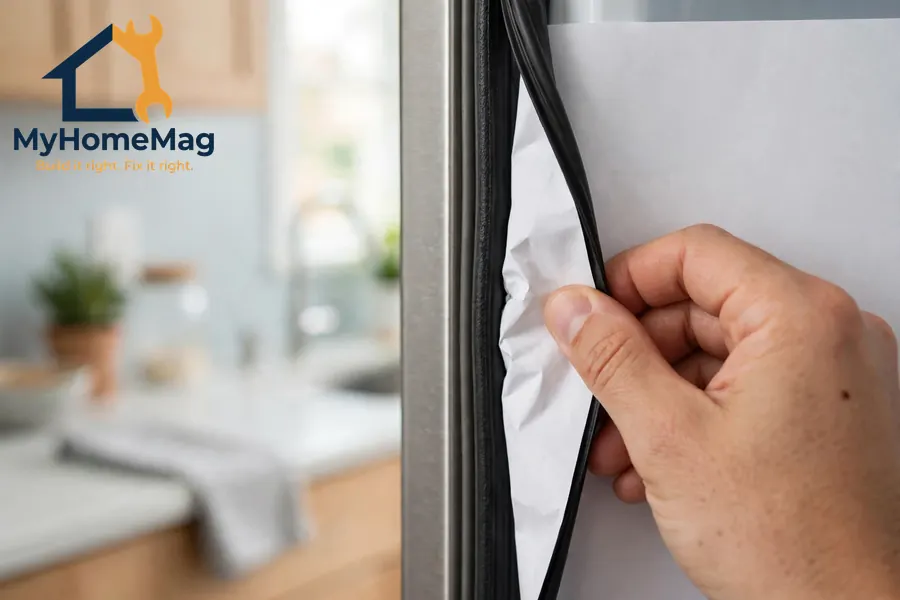
Try the paper test: close the door on a sheet of paper and pull gently. You should feel resistance all the way around; if it slides out easily in one spot, the seal is weak there.
Wipe the gasket with warm soapy water. Look for tears, cracks, or sections gone flat and hard: a gasket that no longer springs back needs replacing. A new door gasket often falls in an approximate range of $100 to $250 installed, depending on the model.
Check 7: Frost on the Evaporator Coils
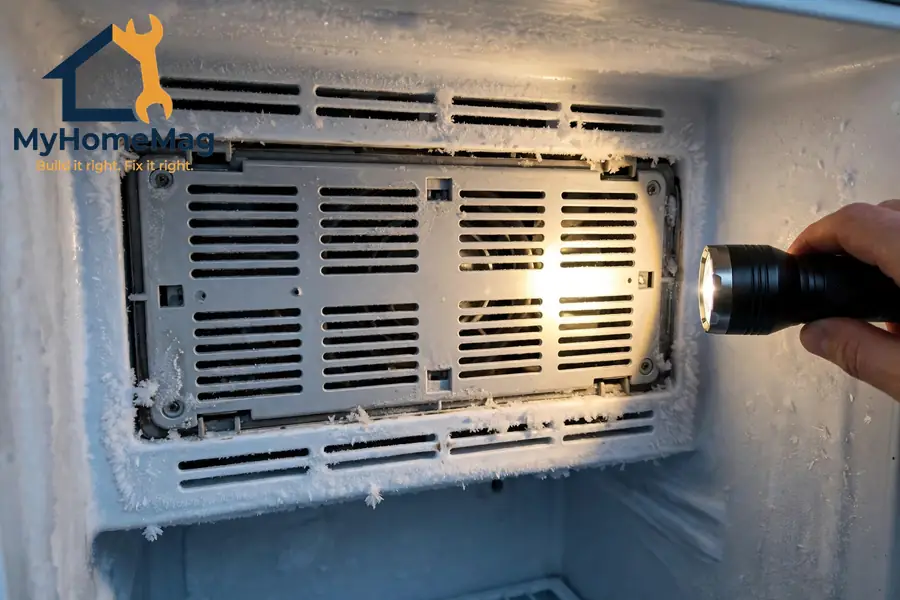
Some frost is normal, but heavy frost is not. When the defrost system fails, frost builds up on the evaporator coils until it blocks airflow. The freezer may still feel cold, but the fridge warms up over days.
Look at the back wall inside the freezer: a thin, even layer of frost is normal, but thick frost covering the whole panel points to a failed defrost heater, thermostat, or timer.
A manual defrost can help for a few days: unplug the fridge, move food to coolers, and let all the ice melt fully. If it cools for a week, then warms again as frost returns, the defrost system is the likely cause.
Do not chip ice off the coils with a knife: a puncture can release refrigerant. A defrost repair often costs roughly $150 to $350 installed; if frost returns quickly, call a technician.
What Repairs Cost, and When Replacement Makes More Sense
Treat every figure as an approximate US planning range, not a quote, and get a written estimate before authorising work.
| Repair | Approximate US range (installed) |
|---|---|
| Evaporator fan motor | $150–$400 |
| Damper control | $150–$300 |
| Defrost heater or thermostat | $150–$350 |
| Door gasket replacement | $100–$250 |
| Condenser coil cleaning (professional) | $75–$150 |
| Sealed system repair (compressor, refrigerant leak) | $500–$1,000+ |
If a repair costs more than half a comparable new fridge and the unit is over ten years old, price a replacement. The US Department of Energy notes older refrigerators can use far more energy than modern ones.
A fan, damper, or gasket repair on a fridge under eight years old is usually worth doing.
Preventing the Next Warm Fridge
Most causes build up slowly. Clean the coils twice a year, check the door seal at the same time, and keep vents clear after every big shop.
Check the temperature monthly with a thermometer, and listen for a fan that goes quiet or a fridge that runs constantly.
When to Call a Professional
Call a professional if the fan is silent or grinding, the damper lets no air through, frost returns quickly after a full defrost, or the fridge warms again within days of a fix.
Call sooner if you smell burning, hear loud clicking, or see damaged wiring. Sealed-system work — refrigerant, compressor replacement, or a suspected leak — needs licensed handling and is not a do-it-yourself job.
Before the visit, note your thermometer readings, whether the fan runs, and whether air comes from the vent.
If the freezer is warm too, the fault may be the compressor or sealed system — a separate path, covered in our companion guide where a fridge not cold but freezer is is the starting point.
A Simple Plan to Follow
Start with food safety, then work in order: settings, vents, fan, damper, coils, gasket, and frost. Stop at the first check that explains the problem.
If one check fixes it, give the fridge four hours to settle. Do not ignore a slow warm-up: a small airflow problem today becomes spoiled food next week. A freezer works refrigerator doesn’t pattern is the same warning: cold air is being made, but it is not reaching the food.
Frequently Asked Questions
How do I know if my fridge is too warm?
Use a fridge thermometer on a middle shelf. The FDA recommends 40°F or below for the refrigerator and 0°F for the freezer. If the reading stays above 40°F after four hours with the door closed, the fridge is too warm.
Why is my fridge warm but the freezer is cold?
The freezer makes the cold air, and a fan moves some of it into the fridge through a damper. When the fan stops, the damper sticks, or frost blocks the airflow, the freezer stays cold while the fridge warms. That is why a fridge not cooling but freezer works usually points to an airflow problem, not a failed compressor.
Can a dirty condenser coil cause the fridge not to cool?
Yes, especially in a dusty home or a home with pets. Dusty coils force the fridge to work harder, and the fresh-food section usually warms first. Cleaning is free and worth doing first.
How long can food stay safe in a warm fridge?
Not long. Perishable food should not stay above 40°F for more than two hours. When in doubt, throw it out.
Is it worth repairing a fridge that is not cooling?
A fan, damper, gasket, or defrost repair on a fridge under eight years old is often worth the approximate $100–$400 cost. A sealed-system repair over $500 on a fridge over ten years old usually is not.
Related Guides
- MyHomeMag
- Appliance Guides
- Refrigerator Leaking Water Inside? Causes and Safe Fixes
- Dishwasher Not Draining? Causes, Fixes, and When to Call a Pro
- Bosch Dishwasher Not Draining? Causes, Safe Checks, and When to Call a Pro
- Washing Machine Leaking: Find the Source, Stop the Water, and Fix It Safely


One Response