
A washing machine leaking across the laundry floor is stressful, and it is easy to panic. However, most leaks come from a small number of places, and you can usually find the source with a calm, step-by-step check.
For example, a loose hose, a worn door seal, or too much detergent can all leave water on the floor. Moreover, the location of the water often tells you where to look first. In short, slow down, stop the water, and work through the checks below before you run the machine again.
This guide is practical and US-focused. It covers the common causes, the safety steps to take first, the checks you can do at home, and when it is smarter to call a professional. You can find more practical guides like this in our Appliance Guides section here on MyHomeMag.
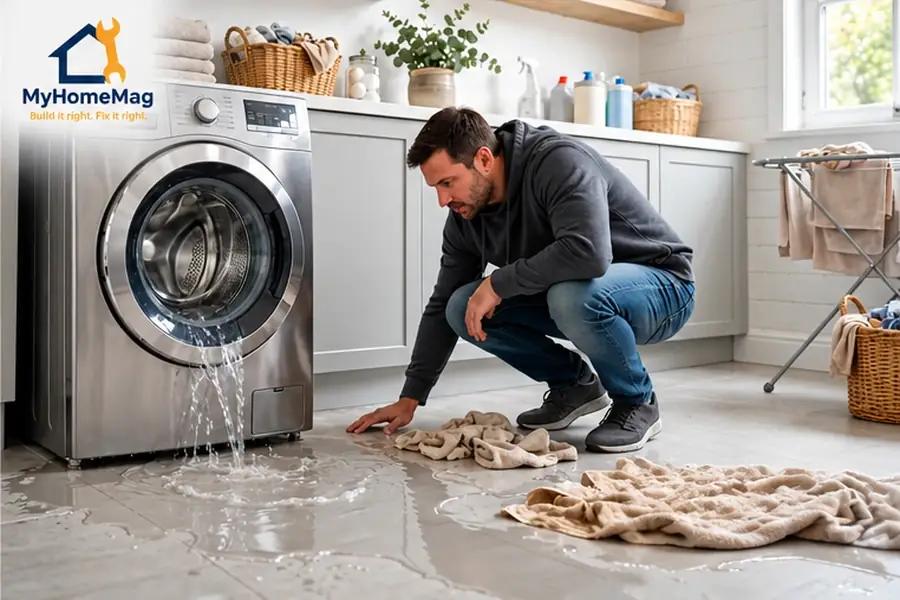
Why a Washing Machine Leaks
A washer moves a lot of water in a short time, and every connection in its fill, wash, drain, and spin cycle has to stay sealed. When one part wears out, loosens, or gets blocked, water finds the easiest way out.
Age matters, but so does use. Overloading, too much detergent, hard water, and hoses rubbing against a wall all shorten the life of seals and connections. The good news is that a leak does not always mean a major repair — sometimes the fix is tightening a connection, cleaning a seal, or clearing a filter.
Stop the Water First: Safety Checklist
Do these steps before you move the machine or touch any wet part. Water and electricity are a dangerous mix.
- Unplug the machine. If the plug is wet, turn off the laundry breaker first, then unplug it once safe.
- Turn off the water. Close both supply valves behind the machine, or the main house supply if you cannot reach them.
- Do not run a leaking machine again until you know the cause.
- Protect the floor. Put towels down, mop up standing water, and check under and behind the machine.
- Stop if you see damage. A damaged cord, scorched outlet, burning smell, or water on electrical parts means call a professional.
- Check for hidden water. Look under the machine and, if upstairs, in the room below.
Once the water is off and the area is safe, start looking for the source.
Common Causes at a Glance
| Leak source | What you usually see | Most likely fix |
|---|---|---|
| Loose or cracked supply hose | Water at the back, near the wall valves | Tighten, replace the hose, or replace the washer in the fitting |
| Drain hose problem | Water at the back or near the drain pipe | Re-seat the hose, clear a kink, or replace a cracked hose |
| Worn door seal (front loader) | Water at the front, under the door | Clean the seal, or replace it if it is torn or flattened |
| Too much detergent or overloading | Suds and water spilling from the door or dispenser | Use less detergent, run a rinse cycle, and load correctly |
| Blocked drain pump filter | Water underneath, slow draining, or a musty smell | Clean the filter and check for trapped objects |
| Faulty inlet valve | Water leaking even when the machine is off | Replace the valve — this is usually a pro job |
| Drain or standpipe blockage | Water backing up from the drain pipe | Clear the blockage or call a plumber |
Use this table as a starting point, not as a final diagnosis. The checks below will help you narrow it down.
Check 1: The Supply Hoses at the Back
Start at the back, because supply hose leaks are common and easy to spot. Look at both hoses where they connect to the wall valves and to the machine, for drips, damp spots, or white mineral marks. Then feel them gently: a cracked, bulging, or very stiff hose is past its best, even if it is not leaking yet. Moreover, check for kinks or pressure against the wall.
If a connection is only slightly loose, tightening it by hand, plus a quarter turn with pliers, may stop the drip. However, do not over-tighten, because that can crack the fitting. If the hose is damaged, replace it — rubber hoses are usually replaced every three to five years.
Check 2: The Drain Hose and Standpipe
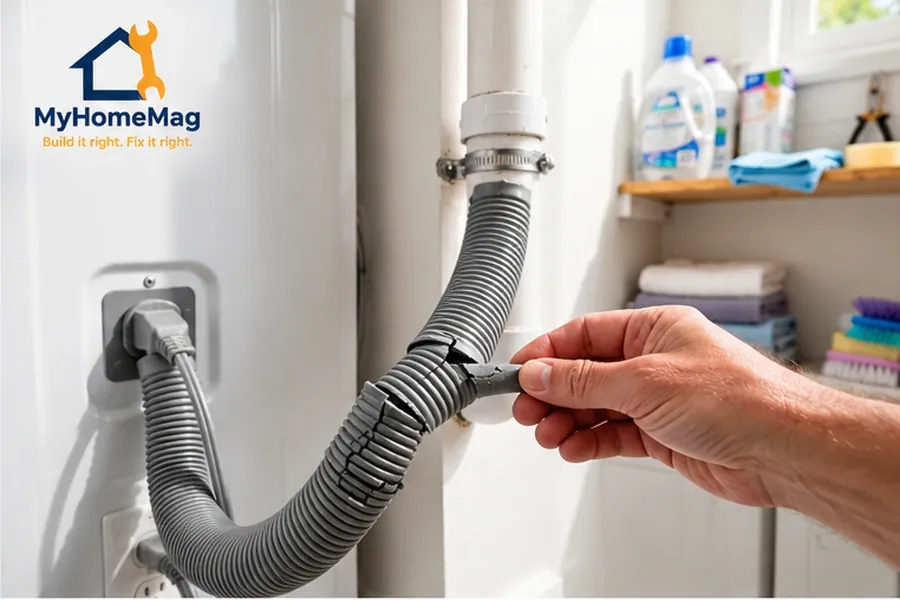
Next, look at the drain hose. It should sit securely in the standpipe or laundry drain, without being pushed too far down and without falling out during the spin cycle. For example, if it has slipped out, water will pour onto the floor during draining, even though the machine itself is fine. Push it back securely, but leave a small air gap so water cannot siphon back. Also check its full length for cracks, kinks, or sharp bends. If the drain pipe itself is backing up, call a plumber — the problem may be a household drain blockage, not the washer. Drainage trouble is not unique to washers: if your dishwasher is not draining either, that guide covers similar checks.
Check 3: The Door Seal on a Front Loader
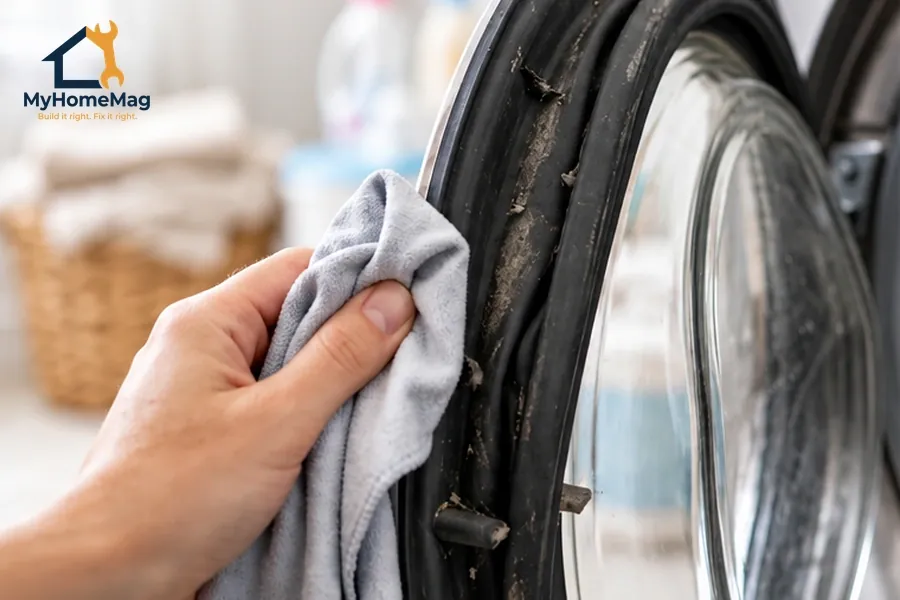
Front-loading machines rely on a rubber door seal, also called a gasket, to keep water inside. This seal can trap lint, hair, coins, and detergent residue, and over time it can wear, flatten, or tear.
Open the door and run your fingers slowly around the seal, including the folds, looking for cracks, tears, mould, or a section that no longer springs back. Wipe it with a damp cloth and a mild cleaner, and remove anything trapped in the folds.
If the seal is only dirty, cleaning it may stop a small leak. However, if it is torn, hardened, or badly distorted, cleaning will not fix it. A replacement seal is a common repair, but it can be fiddly, so many people prefer a technician for this job.
Check 4: Detergent, Suds, and Overloading
This check surprises many people. Using too much detergent, or the wrong type, can create excess suds that spill from the door, the dispenser, or the top of the machine.
High-efficiency (HE) machines need HE detergent, and usually far less than people expect. If you see a mountain of suds, or a soapy film after the cycle, you are almost certainly using too much. Try half the amount you used before, and see whether the leak stops.
Overloading causes a similar problem. When clothes are packed tightly, water cannot circulate properly, and the load can become unbalanced. In short, fill the drum loosely, leave room for clothes to move, and wash very bulky items, like heavy blankets, on their own if your manual advises it.
Check 5: The Drain Pump Filter
Many front loaders, and some top loaders, have a drain pump filter near the bottom front of the machine. This filter catches coins, buttons, hairpins, and lint before they reach the pump.
If the filter is blocked, water may drain slowly, pool underneath, or leak from the filter door. Before you open it, put a shallow tray and towels underneath, because water will come out when you unscrew it. Remove the filter, clear any debris, rinse it, and put it back firmly. Moreover, a pump that hums loudly, rattles, or runs without draining may be blocked or worn, and a damaged pump usually needs professional replacement.
Check 6: Leaking When the Machine Is Off
A leak that continues when the machine is switched off points to a different problem. In this case, water is still entering the machine, which usually means a faulty water inlet valve.
The inlet valve controls water from the supply hoses. When it wears out, it may not close fully, so water slowly fills the drum even when the machine is not running. This is not a good DIY first repair, because it involves water and electrical parts — turn off the water, unplug the machine, and call a technician.
Use the leak location as a clue: water at the back points to hoses, water at the front to the door seal or suds, water underneath to the pump filter, and water when the machine is off to the inlet valve.
Prevention: Small Habits That Stop Most Leaks
Prevention is much cheaper than floor repair.
- Check supply hoses every six months for cracks, bulges, and loose connections.
- Replace rubber hoses every three to five years, or sooner if worn.
- Leave a gap behind the machine so hoses are not kinked.
- Clean the door seal and drain pump filter regularly, following your manual.
- Use the right detergent, in the right amount, for your machine type.
- Do not overload the drum, and balance heavy items evenly.
- Turn off the supply valves on a long holiday, especially with older hoses.
In addition, a simple water leak detector on the laundry floor can alert you early, especially upstairs or near wooden floors. Pair these habits with the other maintenance guides on MyHomeMag to keep your whole laundry room in good shape.
When to Call a Pro — and What It May Cost
Call a technician or plumber if water leaks when the machine is off, the leak is inside the machine, you see electrical damage or burning smells, the machine is under warranty, or you have tried the basic checks and the leak keeps coming back.
The table below gives approximate US planning ranges only. These are not quotes, and actual prices vary by model, parts, and local labour rates.
| Repair | Approximate US planning range |
|---|---|
| Supply or drain hose replacement | $20–$80 for parts, more if a technician fits it |
| Door seal replacement | $150–$350, including parts and labour |
| Drain pump filter cleaning (DIY) | $0, plus towels and time |
| Drain pump replacement | $200–$450, including parts and labour |
| Inlet valve replacement | $150–$350, including parts and labour |
| Plumber for a blocked drain | $150–$400, depending on the blockage |
If the machine is old and repair costs approach replacement cost, ask the technician for an honest opinion. A newer, more efficient model may also save water and energy.
A Practical Final Check Before You Run It Again
Before a full load, run a short rinse or drain cycle with no clothes inside, and watch the back, the front, and underneath. If it stays dry, try a small normal load. Moreover, do not ignore a very small leak — a slow drip can warp flooring and encourage mould over months. For more appliance repair walkthroughs, browse our Appliance Guides category.
FAQs
1. Why is my washing machine leaking from the bottom?
Water underneath often comes from the drain pump filter, a cracked drain hose, or an internal hose or pump seal. First, turn off the water and unplug the machine, then check the filter and the hoses at the back. If the base is still leaking after those checks, call a technician rather than running it again.
2. Is it safe to use a washing machine that is leaking a little?
No. Even a small leak can damage flooring, encourage mould, and, if water reaches electrical parts, create a shock risk. Turn off the water, unplug the machine, and find the source before you run it again.
3. Can too much detergent really cause a washing machine leaking?
Yes, it can. Too much detergent, or non-HE detergent in a high-efficiency machine, creates excess suds that can spill from the door or dispenser. Try using half the amount you used before, and make sure you are using HE detergent if your machine requires it.
4. How do I know if the leak is from the door seal or a hose?
Look at where the water appears first. Water at the front, under the door, points to the door seal, the dispenser, or excess suds. Water at the back points to the supply or drain hoses. The timing also helps: a seal leak often shows during washing, while a drain hose leak often shows during draining.
5. Should I replace the supply hoses even if they are not leaking yet?
Yes, if they are old. Rubber supply hoses often last only three to five years, and they can fail suddenly, causing a major flood. Check them every six months for cracks, bulges, or stiffness, and replace them sooner if they look worn. Stainless steel braided hoses are a popular upgrade.
6. What should I do if my washing machine is leaking when it is switched off?
Turn off the water supply valves straight away and unplug the machine. A leak when the machine is off often means the water inlet valve is not closing properly, so water keeps entering the drum. Call a technician to replace the valve, because this repair involves both water and electrical parts.
7. When is it better to replace the washing machine instead of repairing it?
Consider replacement if the machine is old, needs several expensive repairs, or repair costs are close to a new machine — especially if the tub, motor, or control board is damaged. However, a single hose, seal, or pump repair is usually worth doing first.