A dryer that takes too long to dry, smells faintly of burning, or feels hot on the outside is often asking for one thing: a clean vent. The lint filter catches most of the lint, but not all of it. The rest collects inside the vent run, slowly narrowing the pipe until moist air cannot get out of the drum. At that point the question is no longer whether the vent needs cleaning. It is what the cleaning will cost, and whether it is worth paying a professional.
The short answer is that most standard jobs are modest compared with a dryer repair. A short, ground-floor vent that a technician can reach from both ends is usually the cheapest job. A long vent that runs through a wall and out through the roof, or one packed with years of lint or a bird’s nest, costs more — because it takes longer, needs more equipment, and sometimes needs a second person. This guide gives the typical US planning ranges for each case, explains what pushes a quote up or down, and shows what a good quote should include, so you can tell a fair price from a padded one.
That distinction matters, because this article is about cost, not diagnosis. If your dryer produces no heat at all, that is a different fault, covered in our guide on a dryer not heating. If it heats but takes two or three cycles to dry a load, work through the free checks in our guide on a dryer that takes too long to dry first — a clean lint filter and a kinked vent hose are free fixes, and they may solve the problem before you pay anyone. If those checks point to a blocked vent run, this guide is where the money questions are answered.
A dryer vent cleaning cost is usually $100 to $200 for a standard ground-floor vent, and $200 to $350 for a long or roof vent. The price rises with vent length, difficult access, heavy lint build-up, and any repair the vent needs once it is open. Get a written quote that lists the cleaning, the vent inspection, and any extra work separately before you book.
What a Professional Dryer Vent Cleaning Includes

A professional cleaning is more than a quick brush through the hose behind the dryer. A proper visit usually follows the same steps, and knowing them helps you judge whether a quote is complete.
First, the technician disconnects the dryer and inspects the vent hose behind it. That short flexible section is where lint, kinks, and crushing are most common, and it is also where a crushed hose can be replaced cheaply on the spot. Then they clean the full vent run — from the dryer to the outside cap — with a rotating brush and a vacuum that pulls the loosened lint out rather than pushing it further in. Finally, they check the outside cap, make sure the flap opens and closes freely, and run the dryer briefly to confirm strong airflow at the cap.
A good visit also includes an inspection. The technician should tell you whether the vent is the right material — rigid or semi-rigid metal, not plastic or foil, which can sag and trap lint — whether any section sags or is disconnected, and whether the outside cap is damaged or blocked. That inspection is part of what you are paying for. A quote that covers only the brushing, with no inspection and no airflow check at the end, is not the same service, even if the price looks lower.
Ask, before you book, whether the quoted price includes all of that: disconnecting and reconnecting the dryer, cleaning the full run, cleaning the outside cap, and a final airflow check. If any of those are charged separately, they should be listed as separate line items, not discovered on the invoice.
How Much Does Dryer Vent Cleaning Cost?
Treat every figure in this guide as an approximate US planning range, not a quote, and get a written estimate before authorising work. Prices vary by region, by vent length, and by how much lint has built up.
| Job | Approximate planning range |
| Standard vent cleaning, short ground-floor run | $100 to $200 |
| Long vent run, through walls or a crawl space | $150 to $250 |
| Roof vent cleaning, with roof access | $200 to $350 |
| Heavy lint build-up or a bird’s nest removal | Add $50 to $150 |
| Vent hose replacement (short flexible section) | $50 to $120 installed |
| Damaged vent section repair or replacement | $150 to $400 |
| Dryer vent cleaning as part of a wider appliance visit | Often $80 to $150 when bundled |
The most common job — a single-story home with a short vent to an outside wall — sits at the low end of the table. That is the job most homeowners are quoted for, and it usually takes under an hour. A second-story laundry, a vent that runs across the house, or a vent that exits through the roof takes longer, because the technician has to work from two ends, sometimes with a ladder or a second person, and that time is what raises the price.
One more thing to note: a very low quote is not always a bargain. A price far below the standard range may mean the cleaner only brushes the first few feet of the vent, does not vacuum the lint out, or does not check the outside cap. If the airflow is still weak after the visit, you have paid for a cleaning that did not clean the vent.
What Affects the Quote?
Five things move a dryer vent cleaning cost more than anything else. Knowing them before you call means you can describe your vent accurately and get a quote that holds.
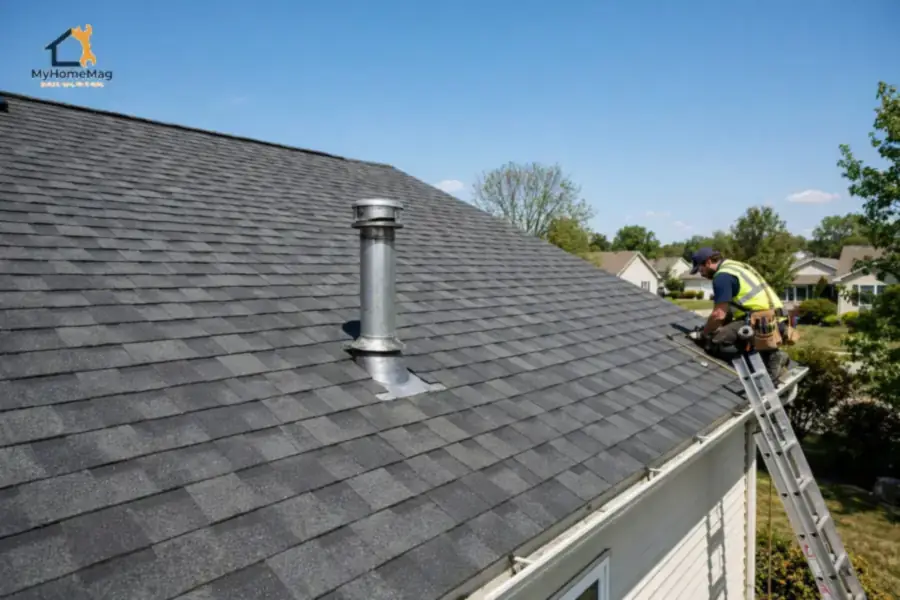
Vent length and route. A short, straight vent to the nearest outside wall is the cheapest to clean. Every bend, every extra meter, and every section hidden inside a wall adds time. A vent that runs up through the attic and out through the roof is the most expensive common case, because the technician has to reach the roof cap safely and clean from above as well as from below. If you know roughly how long your vent is and where it exits the house, say so when you ask for a price — a quote given for a short wall vent will not hold for a roof vent.
Access. Access is the second driver. A dryer in a ground-floor laundry with a clear space behind it is quick to disconnect and reach. A dryer stacked in a cupboard, boxed in by cabinets, or in a second-floor laundry with the vent running down through the floor takes longer to reach and to put back. Roof access matters too: a steep or high roof may need extra safety equipment or a second person, and some companies charge for that separately. If access is difficult, ask whether the quote includes it, or whether there is an access charge on top.
Lint build-up and blockages. A vent cleaned every year or two usually has light build-up and cleans quickly. A vent that has never been cleaned, or one in a home that dries heavy loads and pet bedding, can be packed solid with lint. That takes more passes, more time, and sometimes a stronger vacuum. A bird’s nest, a wasp nest, or a dead animal in the vent is a separate problem: it needs removal before the vent can be cleaned, and most companies charge extra for it. Tell the company if you suspect a nest — a chirping sound, nesting material at the cap, or a sudden complete blockage — so the quote covers the removal.
Vent condition and repairs. Cleaning sometimes reveals a problem. A disconnected section inside a wall, a crushed flexible hose, a plastic vent that has sagged, or a broken outside cap all need fixing, and the fix is not part of the cleaning price. A good technician will show you the problem and quote the repair separately before doing it. That is the right order: clean first, inspect, then quote the repair. Be wary of a visit that turns into a large repair bill without that separate quote.
Region and timing. Prices vary by area, as with any home service. A large city is usually dearer than a small town, and an urgent same-day or weekend visit usually costs more than a booked weekday slot. Bundling helps the other way: if you are already having the dryer serviced, or having several vents cleaned at once, ask for a bundled price. The second job on the same visit is often cheaper than the first, because the travel and set-up are already paid for.
Dryer Vent Cleaning Service Cost vs Dryer Duct Cleaning Price
You will see two phrases used for what is usually the same job: dryer vent cleaning service cost and dryer duct cleaning price. In most homes they mean the same thing — cleaning the pipe that carries moist air from the dryer to the outside. The word “duct” is more common in some regions and in commercial work, while “vent” is the usual word for a home dryer.
The price difference, when there is one, comes from the job, not the word. A “duct cleaning” quote sometimes covers a longer or larger duct system, such as a shared laundry duct in an apartment building, or a vent that serves more than one dryer. A home dryer vent is a single run from one dryer to one outside cap. When you compare quotes, compare the job described — vent length, access, and what is included — not just the headline phrase. Two quotes for the same vent, one called vent cleaning and one called duct cleaning, should be within the same range in the table above.
If a quote uses the word “duct” and the price is far higher, ask what extra work it covers. It may include cleaning the dryer itself, the laundry room ductwork, or a second vent. Those can be legitimate extras, but they should be listed separately, so you are not paying a commercial price for a home job.
DIY vs Professional: What Each Really Costs
Cleaning a dryer vent yourself is possible for a short, accessible vent, and the tools are cheap. A basic vent-cleaning kit — a flexible brush on rods and a vacuum attachment — usually costs $20 to $50, and a replacement vent hose costs $15 to $30. For a short ground-floor vent that you can reach from both ends, that is a real saving against a $100 to $200 professional visit.
The saving disappears when the vent is long, hidden, or exits through the roof. A brush pushed from the wrong end can pack lint tighter instead of removing it, and a brush that comes apart inside the vent leaves a worse blockage than the one you started with. Roof work is a professional job: working on a roof to reach a vent cap is not worth the risk to save a cleaning fee. And on a gas dryer, the gas must be turned off before the dryer is moved — if you are not confident doing that safely, do not move the dryer yourself.
A sensible rule is this: do the free checks yourself, and pay a professional for the full run. Clean the lint filter after every load, check the vent hose behind the dryer for kinks, and feel for strong airflow at the outside cap. Those are the checks in our slow-drying guide, and they cost nothing. If the airflow at the cap is still weak after those checks, the blockage is inside the vent run, and that is the job to pay for. A professional cleaning every one to two years, at the standard range above, is cheaper than a dryer repair caused by overheating — and cheaper than the energy wasted by a dryer that takes two cycles to dry every load.
Safety First: Before You Touch Anything
A dryer vent is a fire risk when it is blocked, and the safety rules are short. Never run a dryer without its lint filter in place — the filter is what keeps most lint out of the vent. Never run a dryer that smells of burning, or that feels very hot on the outside, until the vent has been checked. Lint near a heating element or a gas burner can ignite, and a blocked vent is the most common reason lint builds up there.
Unplug an electric dryer before you move it or disconnect the vent hose, and let it cool first. On a gas dryer, turn the gas off first, and if you smell gas at any point, stop, leave the area, and call your gas supplier or the emergency number — do not switch anything electrical on or off. Do not use a leaf blower or compressed air to clear a vent from inside the house: it can blow lint into the walls and the dryer itself. And do not climb onto a roof to reach a vent cap. That is a professional job, with the right ladder and safety equipment.
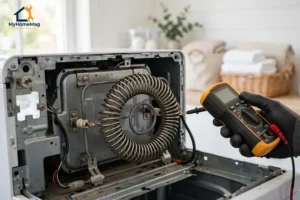
If the dryer has tripped its thermal fuse, overheated, or stopped heating after a period of slow drying, do not keep running it to test it. That pattern points to a vent fault that has already caused a safety device to trip, and it is covered in our guide on a dryer not heating. Get the vent cleaned and the dryer checked before you use it again.
Signs You Need a Cleaning Now

You do not need to guess whether the vent needs cleaning. These signs are the usual ones, and any two of them together are enough to book a cleaning rather than wait for the annual visit.
A load that takes two cycles to dry, or comes out damp in the middle, is the most common sign — and it is the one our slow-drying guide works through in detail. A laundry room that feels hot and humid while the dryer runs is another: the moist air is not leaving the house, so it is staying in the room. A burning smell, a musty smell, or visible lint around the outside cap all point the same way. And a dryer that trips its thermal fuse, or stops heating after a period of slow drying, has already told you the vent is blocked — the heat had nowhere to go.
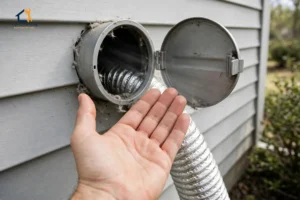
One sign is easy to miss: the outside cap. Go outside while the dryer is running and feel the airflow at the cap. It should be strong and warm, and the flap should open fully. Weak airflow, a flap that barely moves, or no airflow at all means the vent is blocked somewhere between the dryer and the cap. That check takes a minute, costs nothing, and tells you more than any other single test.
How Often Should You Clean a Dryer Vent?
For most homes, a professional vent cleaning every one to two years is enough. Clean it every year if you dry heavy loads, pet bedding, or large families’ laundry every day — more lint goes through the vent, so it builds up faster. Clean it every year as well if the vent is long, has several bends, or exits through the roof, because a long vent traps lint more easily than a short straight one.
Clean it sooner, regardless of the schedule, if any of the signs above appear. A vent does not wait for the calendar. If drying times have crept up over a few weeks, or the laundry room has started feeling humid, the vent is already partly blocked, and waiting for the annual visit only makes the cleaning harder — and more expensive, if the build-up has hardened.
Between professional cleanings, the habits that keep the vent clear are simple. Clean the lint filter after every load, and wash it with soapy water every few months so softener residue does not block the mesh. Check the vent hose once a year for kinks, crushing, or sagging, and do not overload the drum: a packed drum blocks airflow and pushes more lint into the vent. Those three habits are the cheapest vent maintenance there is.
What to Ask Before You Book
A good quote is a clear quote. Before you book, ask these questions, and expect straight answers to all of them.
First, what is included in the price? The answer should cover disconnecting and reconnecting the dryer, cleaning the full vent run, cleaning the outside cap, and a final airflow check. Second, how is the vent cleaned — with a rotating brush and a vacuum, or just a brush? A vacuum that pulls lint out is the method that actually clears the run. Third, what happens if the vent needs a repair? The technician should inspect, show you the problem, and quote the repair separately before doing it.
Fourth, is there a call-out fee on top of the cleaning price, and is there an extra charge for roof access, a long vent, or a second person? Those charges are legitimate when they apply, but they should be in the quote, not on the invoice. Fifth, how long will the visit take, and will the dryer be tested afterwards? A standard cleaning usually takes under an hour, and the test run at the end is how you know the airflow is back.
Finally, ask what the company will do if the airflow is still weak after the cleaning. A reputable company will re-check the vent, look for a disconnected section or a second blockage, and tell you what it found — not simply charge for a second visit. If a company cannot answer these questions clearly, get a second quote. Two quotes for the same vent, described the same way, should be close to each other. A quote far below the standard range, or far above it with no explanation, is a reason to pause.
Your Quick Plan
If you think the vent needs cleaning, work through this order:
- Do the free checks first: clean the lint filter, check the vent hose for kinks, and feel for airflow at the outside cap. If those fix the drying time, the vent run may not need a professional yet.
- If the airflow at the cap is still weak, get two written quotes for a professional cleaning, describing your vent the same way to both companies — length, route, and where it exits the house.
- Check what each quote includes: full-run cleaning, outside cap, inspection, and a final airflow test. Compare the included work, not just the headline price.
- Book a weekday slot if you can — it is usually cheaper than an urgent or weekend visit — and ask the technician to show you the lint removed and the airflow at the cap afterwards.
- After the cleaning, run one full cycle with a normal load to confirm drying is back to normal. If it is still slow, the problem may be the moisture sensor or the heating system, not the vent — our slow-drying and no-heat guides cover those faults.
- Note the date, and book the next cleaning in one to two years — every year if you dry heavy loads daily or the vent is long or roof-exiting.
If the dryer smells of burning, feels very hot, or has tripped its thermal fuse, stop using it and book the cleaning as an urgent job. Do not keep running it to test it.
Frequently Asked Questions
How much does dryer vent cleaning cost?
A standard dryer vent cleaning cost is usually $100 to $200 for a short ground-floor vent, and $200 to $350 for a long or roof vent. Heavy lint build-up or a bird’s nest can add $50 to $150. Treat these as approximate US planning ranges and get a written quote before booking.
How long does a dryer vent cleaning take?
A standard cleaning usually takes under an hour. A long vent run, a roof vent, or heavy build-up can take one to two hours, especially if the technician has to work from both ends or needs a second person for roof access.
Can I clean my dryer vent myself?
You can clean a short, accessible vent yourself with a brush kit costing $20 to $50. Do not attempt a long vent, a hidden vent run, or a roof vent yourself — a brush pushed from the wrong end can pack lint tighter, and roof work is a professional job. On a gas dryer, turn the gas off before moving the dryer.
How often should a dryer vent be cleaned?
Most homes need a professional cleaning every one to two years, and every year if you dry heavy loads daily, dry pet bedding, or have a long or roof-exiting vent. Clean it sooner if drying times rise, the laundry room feels humid, or the airflow at the outside cap is weak.
Does dryer vent cleaning help a dryer that takes too long to dry?
Yes, when the cause is blocked airflow. A clogged vent traps moist air in the drum, so clothes stay damp no matter how long the cycle runs. If the vent is clean and the dryer is still slow, the moisture sensor or the heating system may be at fault — our guide on a dryer that takes too long to dry works through those checks.
What should a dryer vent cleaning quote include?
A complete quote should list the full vent-run cleaning, the outside cap cleaning, a vent inspection, and a final airflow test, with any extra work — such as a nest removal or a vent repair — quoted separately. Ask whether there is a call-out fee or a roof-access charge on top of the headline price.
Related Guides
- MyHomeMag
- Appliance Guides
- Dryer Takes Too Long to Dry? Vent and Airflow Fixes to Try
- Dryer Not Heating? Electric and Gas Checks to Try First
- Washing Machine Not Draining? Filter, Pump, and Hose Checks
- Water Stuck in Washing Machine? Why It Won’t Spin and What to Check