Introduction
A tankless water heater promises something a traditional tank cannot: hot water on demand, for as long as you need it, without keeping 40 or 50 gallons hot all day and night.
That sounds like an easy win. In practice, it is a trade-off. Tankless units can save energy and floor space, but they cost more up front, need the right gas line or electrical supply, and must be sized carefully for your household.
Moreover, the wrong size can leave you with a lukewarm shower when someone else runs the washing machine. However, the right size, installed well, can feel like a genuine upgrade.
In short, this guide walks through tankless water heater pros and cons in plain language, so you can decide whether one fits your home and budget. This guide is part of MyHomeMag‘s Home Systems & Upkeep guides.
How a Tankless Water Heater Works
A traditional water heater stores hot water in a tank and reheats it whenever the temperature drops. That is called standby heat loss, and it happens even when nobody is using hot water.
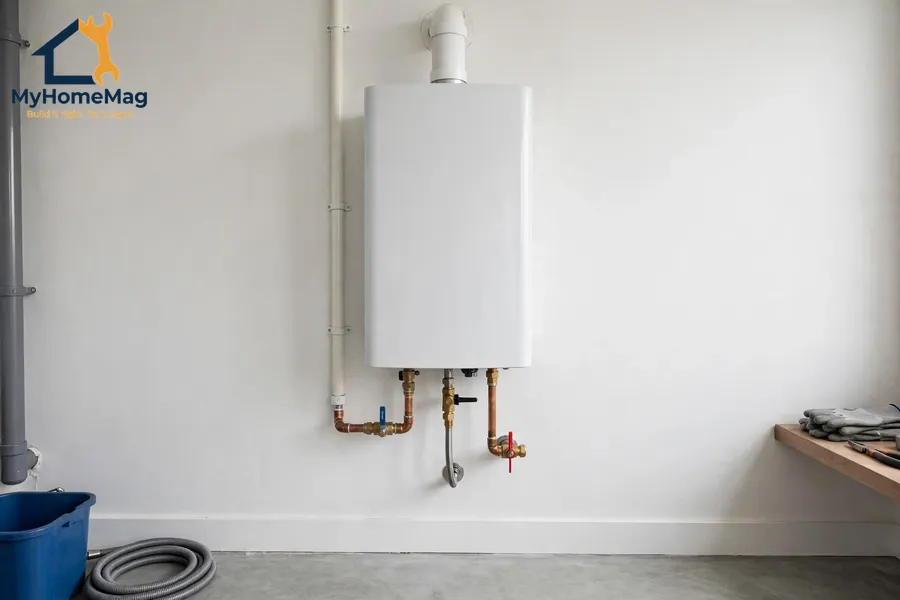
A tankless unit works differently. When you open a hot tap, cold water flows through a heat exchanger. A gas burner or electric element heats that water instantly, and it goes straight to the tap.
For example, turn on the shower and the unit fires up. Turn it off and the unit stops. There is no tank to keep hot, and no stored supply to run out.
That design explains most of the benefits, and most of the drawbacks too.
The Pros
Endless Hot Water, Within Its Flow Limit
This is the headline benefit. As long as the unit can heat water fast enough for the taps in use, you will not run out mid-shower.
For a large household, that matters. Back-to-back showers, a bath after the dishwasher has run, or guests staying over become much less of a juggling act.
However, “endless” does not mean “unlimited at any flow rate”. A unit rated for two showers at once may struggle if you add a third shower and a washing machine. Sizing is everything, and we cover it below.
Energy Savings Over Time
Because there is no tank losing heat all day, a tankless unit can use less energy than a comparable tank model, especially in a household that does not use hot water constantly.
In practice, savings depend on your usage, your incoming water temperature, and whether you choose gas or electric. A home in a cold climate, where incoming water is very cold in winter, will need more energy to heat each gallon, whatever the system.
Moreover, a tankless unit still uses energy whenever hot water flows. It does not make hot water free. It mainly cuts the waste of keeping a tank hot around the clock.
If you want to cut water waste as well as energy waste, our guide to tap washer replacement shows how to stop a dripping tap and save water.
Longer Lifespan
A well-maintained tankless unit can last around 20 years, compared with roughly 10 to 15 years for many tank heaters. That longer life can soften the higher purchase price over time.
That said, lifespan depends heavily on maintenance. Hard water, in particular, can shorten the life of a heat exchanger if scale is allowed to build up. Regular descaling is not optional in hard-water areas.
Space Saving
Tankless units are wall-mounted and much smaller than a tank. They free up floor space in a utility room, garage, or basement.
Less Risk of a Tank Leak
There is no large tank of stored water waiting to fail. That removes one specific failure mode: a tank rupture flooding a room.
However, a tankless unit can still leak at a fitting, a valve, or a condensate line. It is not leak-proof. It simply changes where a leak is likely to start.
The Cons
Higher Upfront Cost
This is the biggest barrier for most homeowners. A tankless unit itself usually costs more than a tank heater, and installation often costs more too.
Gas units may need a larger gas line, a new venting route, or a condensate drain. Electric units may need a dedicated, high-capacity electrical circuit, and sometimes a panel upgrade.
In short, the equipment price is only part of the bill. Get a quote that separates equipment, labor, venting, gas or electrical work, and permits, so you can compare fairly.
Sizing Matters More
A tank that is a little too small still gives you some hot water, just not for long. A tankless unit that is too small gives you lukewarm water at full flow, which feels worse.
You need to match the unit to two things: how much hot water you use at the same time, and how much the water needs to be heated. Cold incoming water in winter needs a bigger temperature rise, which reduces the flow a unit can deliver.
For example, a unit that handles two showers in a warm climate may only handle one comfortably in a cold climate. Always size for winter, not for a mild spring day.
Maintenance Is Not Optional
Tankless units need regular maintenance, especially descaling in hard-water areas. Skipping it can reduce efficiency, cause error codes, and shorten the unit’s life.
Some manufacturers also tie warranty cover to proper maintenance and installation. Keep records of service, and check what your warranty actually requires.
Pros and Cons at a Glance
| Feature | Tankless pros | Tankless cons |
|---|---|---|
| Hot water supply | Endless, within flow limit | Too small a unit gives lukewarm water |
| Energy use | No standby tank losses | Still uses energy on every draw |
| Lifespan | Often around 20 years with care | Hard water can shorten life without descaling |
| Upfront cost | — | Higher equipment and install cost |
| Space | Wall-mounted, compact | Needs venting, gas, or high-capacity power |
| Leaks | No large tank to rupture | Fittings and condensate lines can still leak |
| Maintenance | Fewer tank parts to replace | Descaling and servicing are essential |
| Low-flow use | Efficient at normal flows | Very low flows may not trigger heating |
Gas vs Electric Tankless
Gas Tankless
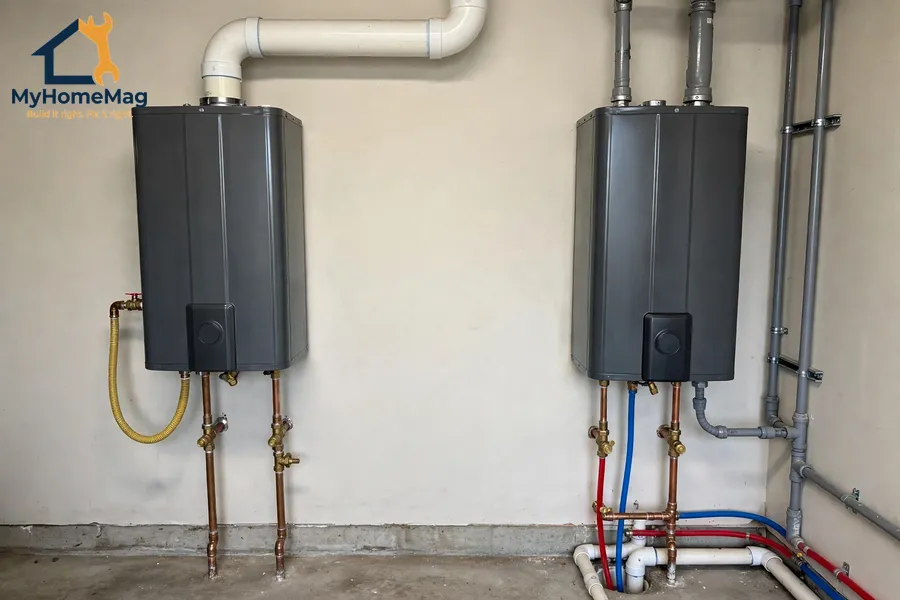
Gas units generally deliver higher flow rates, which makes them a better fit for larger homes or colder climates where a big temperature rise is needed.
However, they need a gas supply, proper venting, and a condensate drain for condensing models. Venting must be done to code, and the gas line may need upsizing.
Gas units also need combustion air and a safe exhaust route. That rules out some locations, or adds cost to make a location work.
Electric Tankless
Electric units are simpler to install in some ways. There is no venting and no gas line, and they can fit in smaller spaces.
However, they need a lot of electrical capacity. A whole-home electric tankless unit can require multiple dedicated circuits and a large breaker capacity. In an older home, that may mean a panel upgrade.
For example, a small point-of-use electric unit for a single sink is a very different job from a whole-home electric unit. Do not assume one implies the other.
Sizing a Tankless Water Heater
Sizing is not guesswork, but it does need two numbers.
First, add up the flow rates of the fixtures you are likely to use at the same time. A shower is often around 2 gallons per minute, a bathroom tap around 1 gallon per minute, and a washing machine or dishwasher adds its own draw. Check your actual fixtures, since low-flow models change the maths.
Second, work out the temperature rise you need. Subtract your coldest incoming water temperature from your target hot-water temperature, usually around 120°F. In a cold climate, that rise can be 70°F or more.
Then, check the manufacturer’s flow rate at that temperature rise. A unit rated at 9 gallons per minute at a small rise may only deliver 5 gallons per minute at a large winter rise.
However, do not oversize wildly either. An oversized gas unit can short-cycle on small draws, and you will have paid for capacity you never use. Aim for your realistic peak, plus a little headroom, and ask the installer to show their sizing calculation in writing.
Safety Checklist
- Never work on gas lines, venting, or high-voltage electrical circuits yourself unless you are qualified and local rules allow it.
- Turn off power or gas before any inspection you do yourself, and follow the manufacturer’s instructions.
- Keep the area around a gas unit clear, and never block vents or combustion air openings.
- Set the output temperature to around 120°F to reduce scalding risk, especially with children or older adults in the home.
- Install carbon monoxide alarms where required for gas appliances, and test them regularly.
- If you smell gas, leave the area and call your gas supplier or emergency services from outside. Do not switch lights or appliances on or off.
- If you see water damage, electrical damage, or a unit that keeps shutting down, stop using it and call a professional.
- Before descaling or servicing, confirm the procedure for your exact model. The wrong cleaner or method can damage the heat exchanger.
Maintenance
Regular maintenance keeps a tankless unit efficient and protects its warranty.
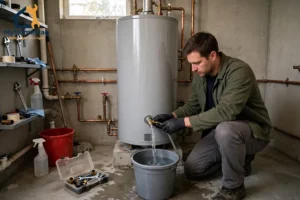
Descaling, often called flushing, removes mineral build-up from the heat exchanger. In hard-water areas, this may be needed once a year. In soft-water areas, less often. A water softener can reduce scale, but it does not remove the need to check.
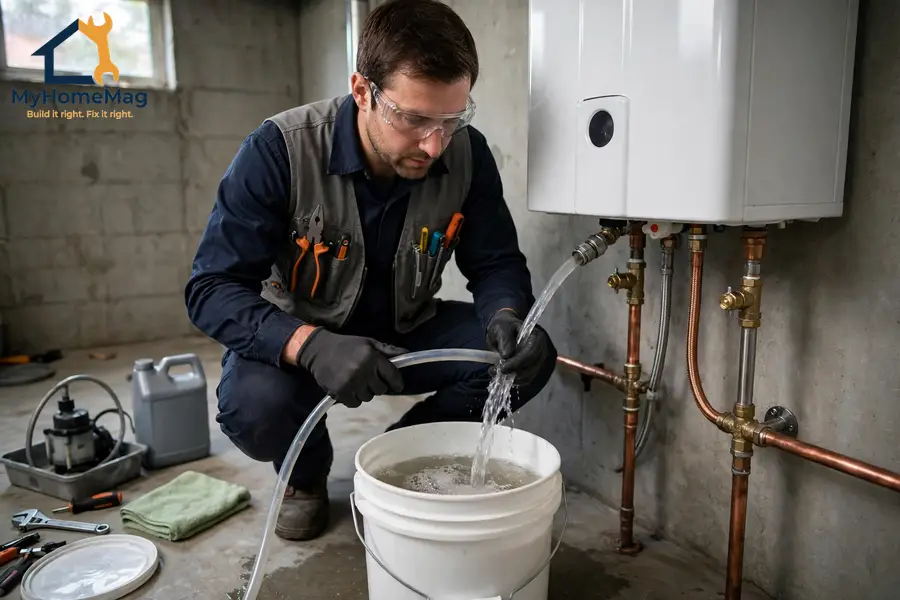
In addition, clean the inlet filter, check for leaks at fittings, and confirm the vent and condensate drain are clear. A professional service can also check the burner, ignition, and controls.
Keep a simple log: date, what was done, and who did it. That record helps with warranty claims and with selling the home later.
For more water-heater upkeep, see our guide to water heater anode rod replacement, and for seasonal system care, our HVAC maintenance checklist.
Costs: Approximate US Planning Ranges
These are approximate US planning ranges, not quotes. Your actual price will depend on your home, your fuel, your location, and the installer.
| Item | Approximate US planning range |
|---|---|
| Tankless unit, electric whole-home | $500–$1,500 for equipment |
| Tankless unit, gas whole-home | $1,000–$2,500 for equipment |
| Professional installation, straightforward swap | $1,000–$2,500 |
| Installation with gas line, venting, or panel work | $2,000–$4,500+ |
| Annual descaling / service visit | $150–$300 |
| Point-of-use electric unit | $150–$500 for equipment |
Moreover, rebates may be available for high-efficiency models in some areas. Check current local and utility programs before you buy, since they change often and usually have specific model requirements.
When to Call a Professional
Call a qualified professional if you need gas line work, venting changes, electrical panel work, or a new condensate drain. Call one too if the unit shows repeated error codes, leaks, fluctuating temperatures, or a gas smell.
A professional should also size the unit, confirm the temperature rise for your climate, and check that your home’s water pressure and flow are within the manufacturer’s range.
For example, if you are replacing a tank heater, ask the installer to confirm in writing that the new unit will handle your realistic peak use in winter. That one sentence can prevent the most common disappointment with tankless systems.
FAQs
1. Do tankless water heaters really give endless hot water?
Yes, within the unit’s flow limit. As long as you do not exceed the flow it can heat at your winter temperature rise, hot water keeps coming. If you exceed that limit, the water will be lukewarm rather than cold, but it will not feel like a proper hot shower.
2. Are tankless water heaters cheaper to run?
They can be, mainly because there is no tank losing heat all day. Actual savings depend on usage, fuel prices, and incoming water temperature.
3. How long does a tankless water heater last?
A well-maintained unit can last around 20 years. Hard water, skipped descaling, and poor installation can shorten that. Regular service and a record of maintenance help protect both lifespan and warranty.
4. Do I need a bigger gas line or electrical panel?
Sometimes. Gas units may need a larger gas line, and electric whole-home units may need multiple dedicated circuits or a panel upgrade. A site check before purchase will confirm what your home needs.
5. What is the cold water sandwich?
It is a brief burst of cooled water between hot-water uses, caused by hot water left in the pipes cooling down. It is usually short-lived. A recirculation system can reduce it, but it adds cost and complexity.
6. How often should a tankless water heater be flushed?
In hard-water areas, often once a year. In soft-water areas, less often. Follow your manufacturer’s guidance for your model, and keep a log of each service. Ignoring scale build-up can reduce efficiency and cause faults.
7. Is a tankless water heater worth it for a small home?
It can be, especially if space is tight and your peak demand is modest. For a small home with one bathroom, an electric or smaller gas unit may be enough. For a larger home, sizing and fuel capacity matter more, so get a written sizing calculation before you decide.