Few things worry a homeowner more than a crack in the foundation. You might spot it in the basement, along an outside wall, or near a window, and wonder at once whether your house is safe.
The good news is that not every crack is a crisis. Many small cracks in foundation walls are the result of normal settling or concrete shrinkage. However, some cracks do point to water, soil movement, or structural stress, and those need attention sooner rather than later.
This guide explains foundation cracks in plain language. For example, you will learn how to read the shape and direction of a crack, what outside causes often sit behind it, and what you can safely check yourself.
Moreover, you will learn when a crack is a watch-and-wait issue, when it needs a repair, and when it is time to call a structural engineer rather than a general contractor.
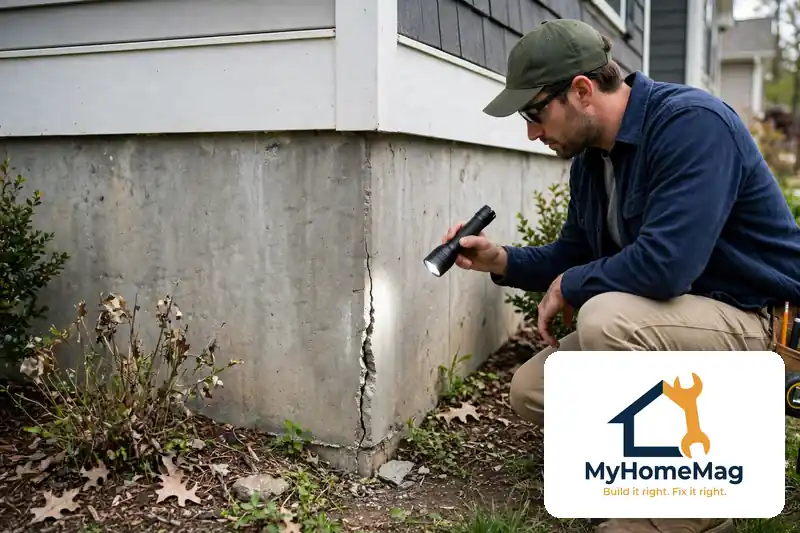
Different foundation cracks mean different things — shape and direction help you judge urgency.
What Causes Foundation Cracks?
A foundation sits between your house and the soil beneath it. That soil moves. It expands when wet, shrinks when dry, and freezes and thaws with the seasons.
In short, most foundation cracks start with movement or pressure. New concrete also shrinks as it cures, and that alone can create thin hairline cracks in the first year or two.
Water is the other big driver. Poor drainage around house foundation walls lets water collect against concrete. Over time, that water adds pressure, finds weak spots, and can widen a crack.
Tree roots, poor compaction under a new build, and heavy loads near a wall can add stress too. For example, a large tree planted too close to a house can dry out soil on one side and leave the other side swollen.
Crack Types at a Glance
| Crack type | What it often looks like | What it may mean | Usual urgency |
|---|---|---|---|
| Hairline vertical | Thin, straight up and down, less than 1/16 inch wide | Normal shrinkage or minor settling | Low — monitor it |
| Vertical, wider | Straight up and down, wider than 1/8 inch, or growing | Ongoing settling or water pressure | Medium — get it checked |
| Horizontal | Runs sideways along a wall, often in a basement | Lateral soil or water pressure pushing inward | High — get expert advice soon |
| Stair-step | Follows mortar joints in a block wall, like steps | Differential settling or soil movement | Medium to high — monitor closely and seek advice |
| Diagonal | Slants across a wall, often near a corner or window | Uneven settling or a footing problem | Medium to high — get it checked |
This table is a starting point, not a diagnosis. A crack can look simple on the surface and still hide a deeper problem, so shape alone never tells the whole story.
Reading Cracks in Foundation Walls
Start with width, direction, and change over time. A thin, stable crack that has not changed in a year is very different from a crack that is widening month by month.
Use a simple method. Mark each end of the crack with a pencil line and date it, then take a clear photo with a coin or ruler for scale. Check it again in a few weeks, and again after heavy rain.
Moreover, look for other clues at the same time. Doors that stick, windows that will not close, floors that slope, and gaps around trim can all point to movement, not just a cosmetic crack.
Water is another clue. If a crack leaks, stains, or stays damp after rain, drainage is likely part of the problem, even if the crack itself looks small.
Warning Signs: When to Stop and Call for Help
Do not ignore a crack if it comes with any of these signs. Stop DIY work, keep the area safe, and get professional advice:
- A horizontal crack, or a wall that bows inward, even slightly.
- A crack that is widening, lengthening, or letting in more water over weeks.
- Doors and windows sticking suddenly, or floors sloping noticeably.
- Water pooling against the outside wall, or a basement that floods after rain.
- Cracks in the foundation plus cracks in upper walls, ceilings, or brickwork.
- Any sign of shifting, such as a chimney pulling away from the house.
In these cases, a structural engineer is usually the right first call. An engineer can assess whether the structure is safe and what repair is truly needed, without selling you a repair.
A foundation contractor, by contrast, is the right call once you know the repair type, for example exterior sealing, drainage work, or crack injection. However, do not let a sales visit replace an independent assessment when the signs above are present.
Fixing Foundation Cracks From the Outside
Many homeowners focus only on the inside of a basement wall. However, fixing foundation cracks from the outside often works better, because it tackles the water and pressure that caused the crack in the first place.
Outside repair starts with access. Soil may need to be dug away from the wall in the affected area, so the crack can be cleaned, sealed, and protected. That work is disruptive, and it is not a small weekend job for most homes.
For example, a contractor may clean the crack, apply an exterior waterproof membrane, add a drainage board, and backfill with gravel rather than dense soil. That combination keeps water away from the wall instead of trapping it against concrete.
Inside injection can seal a leaking crack, and it has its place. In short, it stops water coming through, but it does not always fix the outside pressure that created the crack. Ask any contractor to explain both options, and what each one does and does not fix.
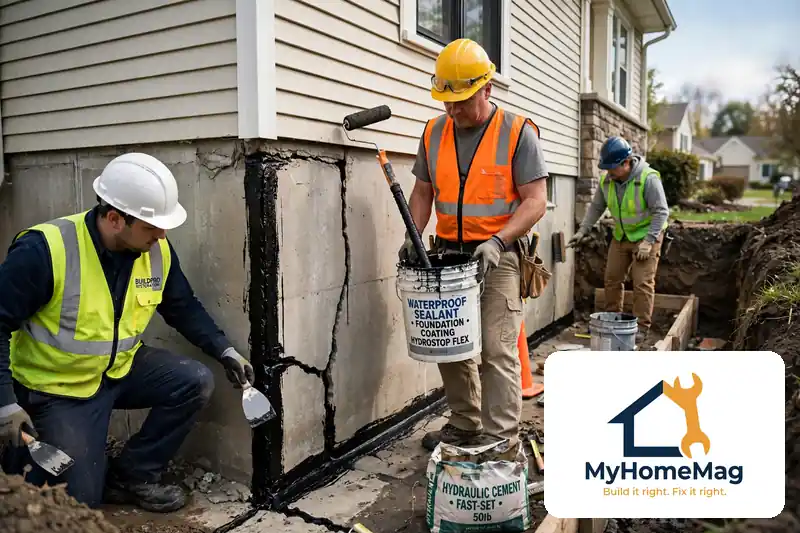
Fixing foundation cracks from the outside tackles water and pressure, not just the visible crack.
Drainage Around House Foundation: The Fix Most People Miss
If water keeps reaching the wall, even a good repair may fail again. That is why drainage around house foundation walls deserves as much attention as the crack itself.
Start with gutters and downspouts. A downspout that dumps water right beside the wall can undo good work in a single storm. Extensions should carry water at least 4 to 6 feet away from the house, and gutters should be cleaned so they do not overflow.
Next, check grading. Soil should slope gently away from the house, not toward it. A good rule is about 6 inches of fall in the first 10 feet, where the site allows it. Low spots, flower beds piled against the wall, and mulch that traps water can all work against you.
Moreover, look at where water goes after a storm. Walk around the house during or just after heavy rain, if it is safe to do so. Puddles beside the wall, a soggy strip of lawn, or a downspout that ends in a low spot are all clues.
French drains, sump systems, and exterior drain tiles can help in stubborn cases. However, these are larger projects, and they need a plan based on your soil, slope, and local code, not a one-size-fits-all kit.
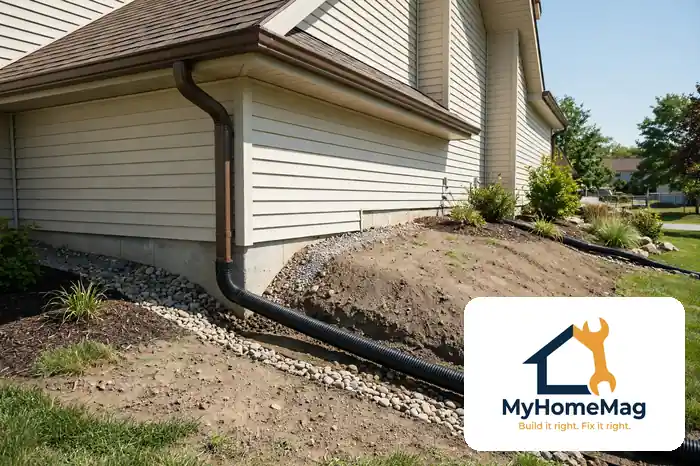
Good drainage around house foundation walls protects both repaired and unrepaired walls.
Foundation Crack Repair Cost: What to Expect
Foundation crack repair cost varies widely, and that is why ranges matter more than single prices. A simple hairline crack that only needs monitoring may cost nothing beyond your time and a few photos.
A single crack injection or interior seal is often in an approximate US range of $300 to $800 per crack, depending on length, access, and region. Exterior excavation and sealing for the same crack can be higher, often roughly $1,000 to $3,000 or more, because digging, membrane, and backfill take more labour.
Larger structural work is a different scale entirely. Underpinning, wall anchors, or major drainage systems can run into several thousand dollars, and in serious cases well above $10,000. In short, get more than one written estimate, and make sure each one describes the same scope.
Moreover, ask what is included. A low quote that only seals the inside may look cheaper, but it can cost more later if outside drainage is left untouched. A clear scope, warranty terms, and a note on drainage should all be in writing before work starts.
Monitoring a Crack Safely
If a professional says a crack is stable and low risk, monitoring is a sensible plan. It does not mean ignoring it. It means checking it on a schedule and acting if it changes.
Check the crack monthly at first, then every few months. Note width, length, dampness, and any new sticking doors or windows. Keep your dated photos in one place, so you can show a contractor or engineer a clear history.
For example, a hairline crack that stays the same through wet and dry seasons is reassuring. A crack that widens after each storm, even slowly, is a reason to move from monitoring to a professional assessment.
In addition, keep drainage in good shape while you monitor. Clean gutters, keep downspouts extended, and do not let soil pile up against the wall. Good drainage protects both repaired and unrepaired walls.
Preventing Future Cracks in Foundation Walls
Prevention is mostly about water and soil, not about the concrete itself. Keep water moving away from the house, and avoid extremes of wet and dry right beside the wall.
Water plants and lawns evenly, rather than soaking one side of the house and leaving the other dry. Keep large trees at a sensible distance, and watch for roots near shallow footings.
Moreover, avoid heavy loads close to the wall, such as a new patio, driveway, or stacked materials that press on backfilled soil. If you plan major landscaping or construction near the foundation, ask about drainage and compaction first.
Finally, fix small outside problems early. A clogged gutter, a broken downspout extension, or a low spot that puddles after rain is cheaper to fix than a foundation repair later.
A Simple Plan to Follow
In short, start by reading the crack: its type, width, and whether it is changing. Then check outside: gutters, grading, and drainage around house foundation walls.
If the crack is thin, stable, and dry, monitor it and keep drainage in good shape. If it is horizontal, widening, leaking heavily, or comes with sticking doors and sloping floors, call a structural engineer first.
Moreover, when you do get a repair quote, compare scope, not just price. Ask whether the work fixes the crack, the water, or both, and get the foundation crack repair cost, warranty, and drainage plan in writing.
For example, a homeowner who fixes drainage first often finds that a small crack stops growing, and a later repair, if still needed, has a much better chance of lasting.
Frequently Asked Questions
Are small foundation cracks normal?
Many hairline cracks are normal, especially from concrete shrinkage or minor settling. However, monitor them, and get advice if they widen, leak, or come with other movement signs.
What is the difference between cracks in foundation walls and cracks in a slab?
Wall cracks often relate to soil pressure and settling, while slab cracks can come from shrinkage, soil movement, or poor compaction. A professional can tell which type matters most in your home, because the repair is different.
Can I fix foundation cracks from the outside myself?
Small surface sealing may be possible for a minor, stable crack, but excavation, waterproofing, and structural work are usually contractor jobs. Moreover, do not dig beside a foundation without knowing where utilities and footings are.
How much does foundation crack repair cost?
It depends on the repair type. A single injection may be roughly $300 to $800, exterior sealing often $1,000 to $3,000 or more, and major structural work can be far higher. Get written estimates for the same scope before you decide.
Does poor drainage cause foundation cracks?
Yes, it is one of the most common contributors. Water against a wall adds pressure and can widen cracks over time, which is why drainage around house foundation walls should be checked before, and after, any repair.
When should I call a structural engineer instead of a contractor?
Call an engineer first for horizontal cracks, bowing walls, widening cracks, sloping floors, or sudden sticking doors and windows. A contractor is right once the repair type is clear and the structure has been assessed.
Keep Reading on MyHomeMag
Explore more practical guides on the MyHomeMag homepage, or browse the Construction & Building category for more structural and building guidance.