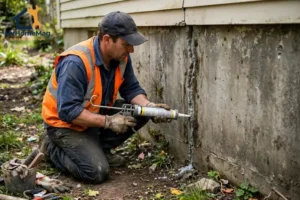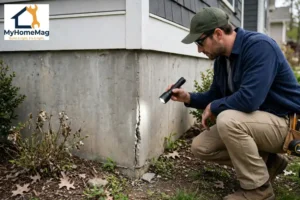
A crack in a foundation wall is worrying enough on its own. However, the next question is usually the hardest one to answer: what will foundation crack repair cost, and how do you know whether a quote is fair?
For example, one homeowner may be quoted a few hundred dollars for a simple seal, while another faces a five-figure bill for drainage and structural work. Moreover, the difference is rarely about luck. In short, the crack type, the cause, the access, and the repair method drive the price far more than the size of the crack alone.
This guide is practical and US-focused, and part of MyHomeMag‘s Construction & Building guides. It explains the main repair methods, what drives foundation crack repair cost up or down, when an engineer is worth paying for, and how to compare quotes without being rushed into work you do not need.
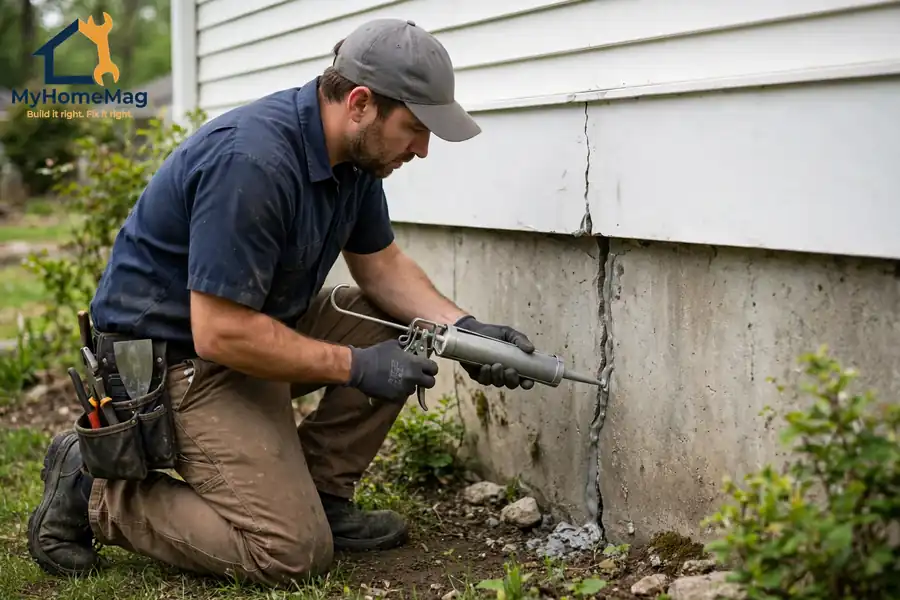
Why Foundation Crack Repair Cost Varies So Much
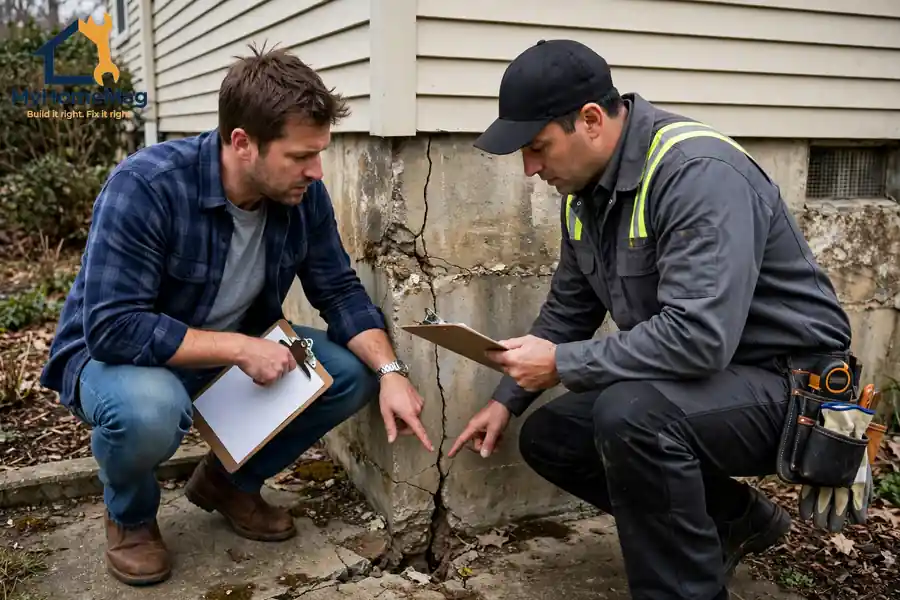
A foundation crack is a symptom, not a single repair. A hairline shrinkage crack in a dry basement wall is a very different job from a horizontal crack caused by soil pressure, even if both look similar at first glance.
Age matters, but so does water. A wall that stays dry most of the year is easier and cheaper to repair than a wall with regular water entry, poor drainage, or soil that expands and contracts with the seasons. Access matters too. A crack that is easy to reach from outside is usually cheaper to fix than one hidden behind a finished basement wall, a deck, or a driveway.
The good news is that many small cracks are inexpensive to monitor or seal. The risk is paying for a cosmetic fix when the real problem is water, soil pressure, or movement that will keep cracking the wall.
What Kind of Crack Do You Have?
Before you talk about cost, you need a basic sense of what you are dealing with. This is not a diagnosis, but it helps you understand a quote.
Hairline vertical cracks are often caused by normal concrete shrinkage as it cures. They are usually narrow, stable, and dry. Vertical cracks that are wider at one end may suggest uneven settling. Diagonal cracks can point to differential movement. Stair-step cracks in block walls often follow the mortar joints and can suggest settling or soil pressure. Horizontal cracks are the most concerning, because they can be linked to lateral pressure from soil or water pushing against the wall.
If a crack is growing, leaking, or wider than about a quarter of an inch, do not rely on a price guide alone. That is the point where professional assessment matters more than a low quote. For background on what different foundation cracks mean, it helps to know the crack type before you ask for prices.
Repair Methods and Approximate Costs
The table below gives approximate US planning ranges only. These are not quotes, and actual prices vary by region, access, labor rates, and the contractor’s method.
| Method | Best for | Approximate US planning range |
|---|---|---|
| Surface sealing / caulking | Small, dry, stable hairline cracks | $150–$500 |
| Epoxy or polyurethane injection | Non-structural cracks that leak or need sealing | $300–$800 per crack |
| Exterior waterproof membrane / sealing | Leaking cracks, exterior access available | $1,000–$3,000+ per crack or section |
| Carbon fiber straps / wall anchors | Bowing or moving walls, structural support | $500–$1,500 per strap or anchor, often $3,000–$10,000+ per wall |
| Steel beams / bracing | Seriously bowed or unstable walls | $5,000–$15,000+ per wall |
| Underpinning / piers | Settling foundations, structural movement | $1,000–$3,000+ per pier, often $10,000–$30,000+ total |
| Drainage correction (gutters, grading, drains) | Water-driven cracks, recurring leaks | $500–$5,000+ depending on scope |
A single injection is often the cheapest professional fix, but it is not always the right one. If water pressure or movement caused the crack, sealing it without fixing the cause may mean paying again later. Conversely, a full drainage project may be unnecessary for a single dry shrinkage crack. If you want more detail on the exterior side of the work, see our guide to fixing foundation cracks from the outside.
What Drives the Price Up or Down?
Several factors can move a quote by thousands of dollars, even for the same crack.
First, access. Exterior excavation, removing a deck, or opening a finished basement wall adds labor and restoration costs. Interior injection from an unfinished basement is usually the simplest access.
Second, water. A dry crack is simpler than a leaking one. If water is entering, the contractor may need to manage water during the repair, add exterior waterproofing, or improve drainage. That work is often priced separately.
Third, the number of cracks. Some contractors charge per crack, while others price a wall or a section. Ask how the quote is structured before you compare two numbers.
Fourth, monitoring and diagnosis. A contractor who measures crack width, checks for movement, and looks at gutters, grading, and drainage is doing more work than one who glances at the crack and names a price. That extra care can be worth paying for.
Fifth, permits, engineering, and restoration. Structural work may need an engineer’s report, a permit, or finishing work afterwards, such as drywall, paint, or landscaping. Ask whether those costs are included.
Finally, urgency. A contractor who can start tomorrow may charge more than one booked weeks ahead, but a leaking or moving wall should not wait for the cheapest slot.
Engineer vs Contractor: Who Should You Pay First?
This is one of the most useful decisions in the whole process, and it can save money even though it adds an upfront cost.
A structural engineer does not sell repairs, so their advice is usually independent. An engineer’s report typically costs a few hundred dollars, often in the range of $300–$800 for a residential assessment, depending on region and complexity. That report can tell you whether a crack is structural, whether movement is ongoing, and what repair approach is appropriate.
A contractor, on the other hand, sells a repair method. Many reputable contractors give honest assessments, but their recommendation will naturally lean towards the method they offer. For a small, dry, stable crack, a contractor’s assessment may be enough. For a horizontal crack, a bowing wall, a crack that is growing, or a quote that runs into five figures, an independent engineer is usually money well spent.
In short, pay for diagnosis before you pay for a major repair. An engineer can also help you compare contractor quotes on an equal basis, because you will be asking each contractor to price the same scope.
Safety Checklist: When to Stop and Get Help
Do these checks before you accept a repair or try any DIY sealing.
- Do not ignore a growing crack. Mark the ends with a pencil and date, and check it again in a few weeks.
- Watch for water. Regular leaks, damp walls, or mold suggest a water problem, not just a cosmetic crack.
- Look for movement. Doors sticking, windows jamming, or floors sloping can accompany foundation movement.
- Stop if the wall is bowing. A wall that curves inward needs structural assessment, not surface filler.
- Do not dig near utilities. Exterior excavation must avoid gas, water, electrical, and sewer lines.
- Check for permits. Structural work, piers, and wall reinforcement may need permits and inspections.
- Get a second opinion on large quotes. Any quote over several thousand dollars deserves at least one independent check.
If you see any of these warning signs, pause the repair conversation and get a structural engineer involved first.
How to Compare Quotes Fairly
Quotes are only comparable when they describe the same work. Ask every contractor the same questions, in writing where possible.
What method are you proposing, and why is it right for this crack type? Does the price include excavation, waterproofing, drainage, permits, and restoration? Is the work guaranteed, and for how long, and what does the warranty actually cover? Will you monitor the crack before and after the repair? What happens if the crack reappears?
Be wary of a quote that is dramatically lower than others without a clear explanation. It may exclude drainage, restoration, or warranty cover, or it may use a method that does not address the cause. Equally, the highest quote is not automatically the best. A clear, itemized quote from a contractor who explains the cause is usually more trustworthy than a single lump sum with no detail.
Moreover, ask about payment terms. A reputable contractor will not demand full payment upfront for a major structural job. Staged payments tied to completed work are normal.
When a Small Crack Does Not Need an Expensive Repair
Not every crack needs a contractor. A narrow, dry, stable hairline crack may simply need monitoring. Mark it, photograph it with a ruler for scale, and check it every few months. If it does not change, does not leak, and the wall is not moving, a costly repair may not be justified.
However, monitoring is not the same as ignoring. If the crack widens, starts leaking, or is joined by other signs such as sticking doors or sloping floors, reassess quickly. Small cracks can stay small for years, but they can also be the first sign of a water or soil problem that is cheaper to fix early.
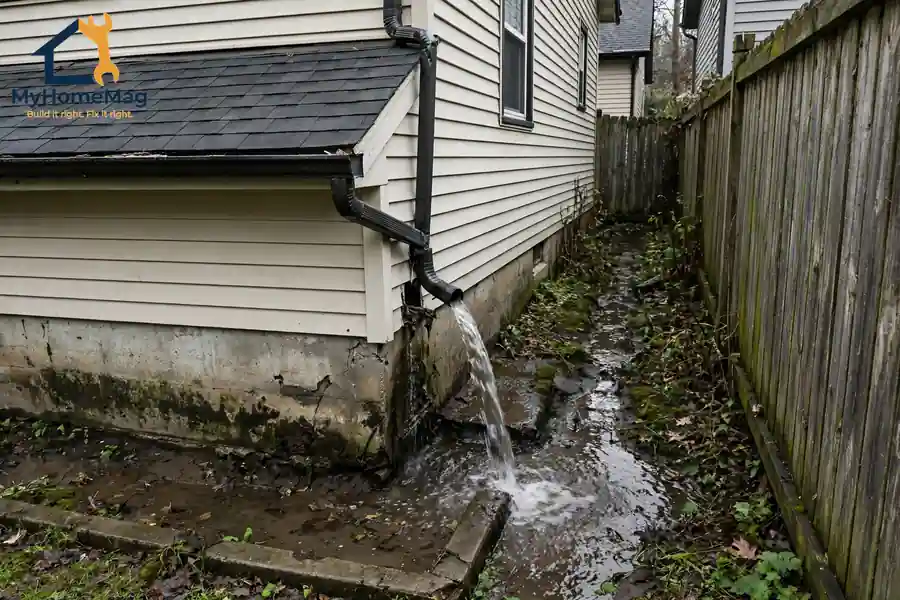
For example, improving gutters, extending downspouts away from the house, and regrading soil so water drains away from the foundation can cost far less than a structural repair, and may stop a crack from getting worse. That drainage work is often the most valuable money a homeowner can spend.
Prevention: Spending Less by Fixing Water First
Most foundation problems are water problems in disguise. Keeping water away from the foundation reduces pressure on walls, limits soil movement, and protects any repair you do pay for.
- Keep gutters clean and downspouts extended at least several feet from the house.
- Grade soil so it slopes away from the foundation, not towards it.
- Avoid planting large trees too close to the house, where roots and soil drying can affect movement.
- Fix plumbing leaks promptly, including outdoor taps and irrigation lines.
- Check the basement or crawl space after heavy rain, not just when you notice a crack.
- Monitor cracks you have already repaired, especially in the first year.
In addition, a simple annual walk around the outside of the house, looking for new cracks, pooling water, and gutter problems, can catch issues while they are still inexpensive.
A Practical Way to Budget
Start with diagnosis, then scope, then price. First, identify the crack type and whether it is stable, leaking, or moving. Second, decide whether you need an engineer. Third, get at least two itemized quotes for the same scope.
As a rough planning guide, many homeowners spend a few hundred dollars for a single sealed crack, a few thousand for exterior waterproofing or drainage work on one wall, and ten thousand or more for structural piers, wall anchors, or underpinning. Those ranges are wide because the work is wide. A quote that falls outside them is not automatically wrong, but it deserves a clear explanation.
Finally, keep records. Photographs, measurements, engineer reports, and warranties will help if you sell the house, make an insurance claim, or need follow-up work. A well-documented repair is also easier for a future buyer to trust.
FAQs
1. What is the average foundation crack repair cost?
There is no single average that is useful, because the method matters more than the crack. A simple injection often costs $300–$800 per crack, exterior sealing may cost $1,000–$3,000 or more, and structural work such as piers or wall anchors can run into five figures. Get an itemized quote for your specific crack type and cause.
2. Does homeowners insurance cover foundation crack repair?
It depends on the cause. Sudden, covered events such as a burst pipe may be covered, but gradual settling, poor drainage, or normal shrinkage often are not. Check your policy and ask your insurer before assuming a repair will be paid for, and keep photographs and reports.
3. Is epoxy injection enough for a leaking foundation crack?
It can be, for a non-structural crack where water entry is the main problem and the wall is stable. However, if the crack is caused by soil pressure, ongoing movement, or poor drainage, injection alone may not last. A contractor should explain why injection is appropriate and what would make it fail.
4. Should I hire a structural engineer before a contractor?
For small, dry, stable cracks, a reputable contractor may be enough. For horizontal cracks, bowing walls, growing cracks, or any quote running into thousands of dollars, an independent engineer is usually worth the $300–$800 assessment cost, because it helps you compare quotes for the same scope.
5. How long does foundation crack repair take?
A single injection can often be done in a few hours. Exterior sealing or drainage work may take one to several days, depending on excavation and weather. Structural work such as piers or wall anchors can take several days to weeks, including engineering, permits, and inspections.
6. Will a repaired foundation crack come back?
It can, especially if the cause was not addressed. A sealed crack may reopen if soil pressure, water, or movement continues. That is why drainage, monitoring, and a warranty matter. Ask what the warranty covers, how long it lasts, and whether it transfers if you sell the house.