A driveway does a hard job every day. Cars roll over it, rain soaks it, sun heats it, and winter freezes it. So when it starts to look tired, it is natural to ask one question first: what is the driveway resurfacing cost?
For example, a driveway with faded color and fine surface cracks may only need a fresh top layer. However, a driveway that is sinking, breaking into large pieces, or draining toward the house may need much more work. In short, resurfacing is not one fixed price. It depends on the driveway you have, the condition underneath, and the finish you choose.
This guide explains the difference between resurfacing, repair, and replacement. Moreover, it shows what drives the price, what materials cost, and how to compare quotes fairly. The ranges below are approximate US planning ranges, not quotes. Your final price will depend on size, location, and local labor. This guide is practical and US-focused, and part of MyHomeMag‘s Outdoor Construction & Systems guides.
What Does Resurfacing Actually Mean?
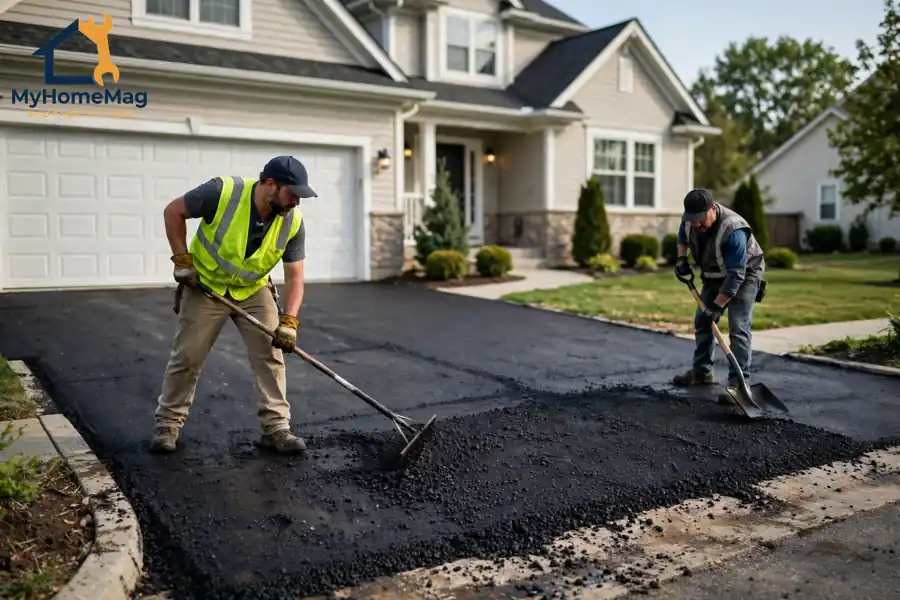
Resurfacing means adding a new surface layer over an existing driveway that is still structurally sound. In other words, the base stays, but the worn top is renewed.
For an asphalt driveway, resurfacing often means an overlay: a new layer of asphalt laid over the old surface after cleaning and patching. For a concrete driveway, resurfacing can mean a thin overlay, a stamped overlay, or a coating system applied to a sound slab.
Moreover, resurfacing is not the same as sealing. Sealing protects the surface with a thin coat. Resurfacing rebuilds the wearing surface. As a result, resurfacing usually lasts longer and costs more than sealing alone.
The key test is simple. If the base is stable and the damage is mostly on the surface, resurfacing can work well. If the base has failed, a new surface will soon crack again over the same weak spots.
Resurface, Repair, or Replace?
Choosing the right job is the biggest cost decision you will make. A cheaper resurface over a failed base is not a saving. It is a short delay before a bigger bill.
Use this table as a starting point, then confirm the condition with a contractor who inspects the driveway in person.
| Condition | Best option | Why |
|---|---|---|
| Faded color, light wear, fine surface cracks | Seal or resurface | Base is sound, surface needs renewal |
| Small cracks and a few potholes | Repair, then resurface | Fix weak spots before adding a new layer |
| Wide cracks, large broken pieces, sinking areas | Replacement or major repair | Base or slab has failed in places |
| Drainage toward the house or garage | Fix drainage first, then resurface or replace | A new surface will not fix water flow |
| Tree roots lifting the driveway | Root and base repair, then resurface or replace | Roots will keep pushing a new surface up |
| More than about a third of the surface badly damaged | Replacement often makes more sense | Patching everywhere costs almost as much as starting again |
For example, a driveway with two small cracks and fading is a good resurface candidate. However, a driveway with a sunken section near the garage door usually needs the base checked first. In short, do not judge a driveway only by how it looks from the street.
Driveway Resurfacing Cost: Approximate US Ranges
The driveway resurfacing cost varies widely, so think in ranges and in cost per square foot. Most driveways in the US are between about 400 and 800 square feet for a two-car driveway, but yours may be smaller or larger.
The approximate planning ranges below cover a typical resurfacing job, not sealing alone and not full replacement. Always get a written, itemized quote for your exact size.
| Resurfacing type | Approximate planning range | Typical use |
|---|---|---|
| Asphalt overlay | $2,000 to $5,500 | Sound asphalt base, surface wear and light cracking |
| Concrete overlay / resurfacer | $3,000 to $8,000 | Sound concrete slab, surface wear and staining |
| Stamped or decorative concrete overlay | $5,000 to $12,000 | Sound slab, upgraded look with pattern and color |
| Concrete coating / epoxy-style system | $2,500 to $7,500 | Sound slab, durable coating and improved appearance |
| Gravel top-up and regrading | $500 to $2,000 | Gravel driveway, ruts and thin spots only |
Moreover, these ranges assume reasonable access for trucks and equipment. A long, narrow, steep, or hard-to-reach driveway can cost more. For example, extra hauling, hand work, or traffic control all add labor time.
In short, a small, simple asphalt overlay may sit near the low end. A large, decorative concrete overlay with drainage work may sit near the high end, or above it.
What Drives the Price Up or Down?
Several factors matter more than the material name on the quote. Understanding them helps you compare quotes fairly, instead of simply choosing the lowest number.
First, size matters most. Resurfacing is usually priced by the square foot, so a three-car driveway costs more than a single-car driveway. Measure your driveway, or ask the contractor to show the measured area on the quote.
Second, condition matters. Cleaning, crack filling, patching, and levelling take time. A driveway that needs many patches before the overlay will cost more than one that only needs cleaning.
Third, material and finish matter. A plain asphalt overlay is usually the lowest-cost resurfacing option. A stamped, colored, or coated concrete finish costs more, because it needs more labor and specialist products.
Fourth, drainage and base work matter. If water pools on the driveway, the contractor may need to regrade, add a drain, or fix the base. That work protects the new surface, but it adds cost. Skipping it, however, can shorten the life of the job. For exterior drainage problems around the home, our guide to fixing foundation cracks from the outside explains how drainage and exterior waterproofing are handled.
Fifth, access and location matter. Labor rates vary by region. Moreover, a driveway on a steep slope, behind a narrow gate, or far from the road may need extra equipment time.
Finally, preparation matters. Good preparation — cleaning, drying, priming, and patching — takes time, but it is what makes a resurface last. A very cheap quote that skips preparation should raise a question, not excitement.
Material Comparison
Each driveway material has strengths and limits. The right choice depends on your climate, your budget, and how long you plan to stay in the home.
| Material | Resurfacing approach | Strengths | Limits |
|---|---|---|---|
| Asphalt | Overlay, patch and seal | Lower cost, flexible in cold weather, quick to use | Needs sealing, fades and softens in heat |
| Concrete | Overlay, coating, stamped overlay | Long life, clean look, many finishes | Higher cost, cracks can return if base moves |
| Pavers | Reset, re-sand, replace damaged units | Easy spot repair, good drainage options | Weeds in joints, settling if base is poor |
| Gravel | Top-up, regrade, compact | Lowest cost, good drainage | Ruts, dust, stones migrate, needs upkeep |
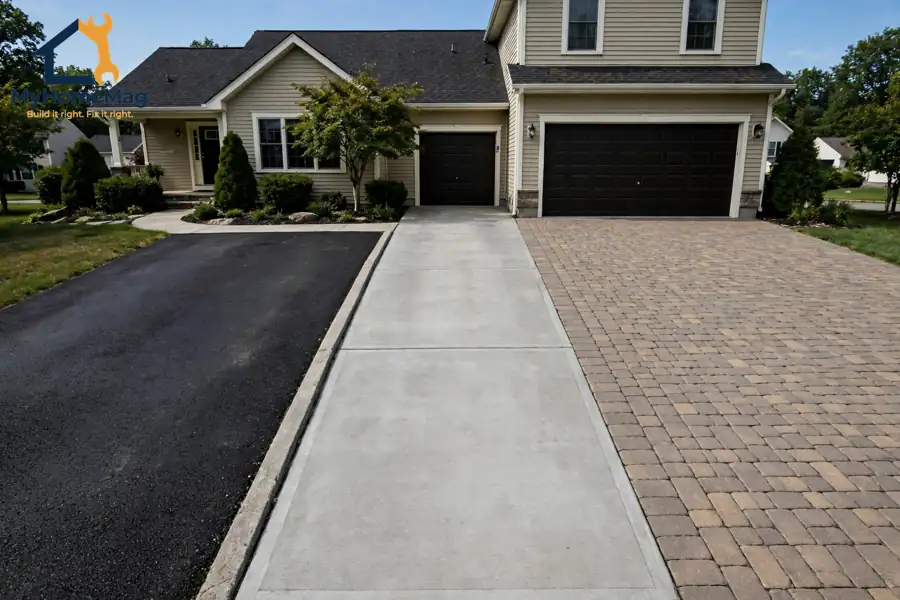
For example, asphalt is a practical choice in colder regions because it flexes slightly with freeze and thaw. Concrete, on the other hand, suits homeowners who want a long-lasting, low-maintenance look and are willing to pay more upfront. In short, there is no single best material for every home. The same upfront-versus-long-term trade-off applies to other outdoor projects; our guide to deck building materials compares costs and durability for decks in a similar way.
How Long Does Resurfacing Last?
A well-prepared asphalt overlay often lasts about 8 to 15 years with sealing and care. A concrete overlay or coating can last 10 to 20 years or more, depending on the product, the climate, and how well the base holds up.
However, life depends on use and care. Heavy vehicles, oil spills, standing water, and harsh winters all shorten surface life. Moreover, a resurface over a weak base will fail much sooner than the ranges above.
To get the most from a resurface, keep water moving away from the surface, fill new cracks early, and reseal asphalt on schedule. Small care jobs are far cheaper than another full resurface.
Safety Checklist Before Work Starts
Driveway work involves heavy equipment, hot materials, and open excavations in some cases. Use this checklist before and during the job.
- Keep children and pets away from the work area, equipment, and fresh surface.
- Move cars, bins, and planters off the driveway and away from truck access.
- Tell the contractor about buried lines, septic parts, sprinkler pipes, and tree roots near the driveway.
- Ask the contractor to mark or protect nearby lawn, paths, and garage thresholds.
- Do not walk or drive on a fresh surface until the contractor says it is ready.
- If the job involves hot asphalt or coatings, keep the area ventilated and follow the contractor’s drying times.
- Stop and ask questions if you see unexpected damage, water, or soft ground under the old surface.
- Do not attempt to fix a sinking or heavily broken driveway yourself with a thin top coat alone.
Moreover, if your project involves digging, confirm that underground utilities have been located. In the US, calling 811 before digging is the standard step, and your contractor should confirm it has been done.
How to Compare Quotes Fairly
Getting three written quotes is a good habit, but only if the quotes describe the same job. A low quote for a thin overlay is not comparable to a higher quote that includes patching, drainage, and a thicker layer.
Ask each contractor to itemize the following:
- Measured driveway area in square feet.
- Preparation work: cleaning, crack filling, patching, and levelling.
- Overlay thickness and material, or coating system and number of coats.
- Drainage or base work, if any, and what it includes.
- Edge work, joints, and protection for nearby surfaces.
- Curing and drying time before cars can use the driveway.
- Warranty: what it covers, for how long, and what voids it.
- Total price, payment schedule, and what is excluded.
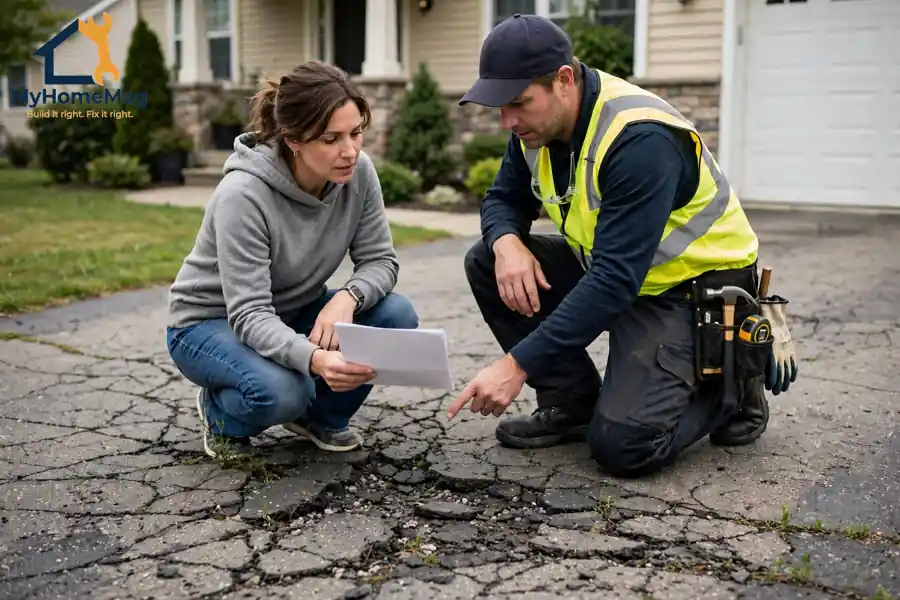
For example, if one quote is much lower than the others, ask what is missing. It may be thinner material, less preparation, or no drainage fix. In short, the cheapest quote is only a bargain if the scope matches.
When to Call a Professional
Some driveway jobs suit a confident DIY homeowner, such as sealing a sound asphalt driveway or filling a small crack. Resurfacing, however, is usually a professional job.
Call a professional if you notice any of these signs:
- Sinking, heaving, or large broken sections.
- Water draining toward the house, garage, or a neighbor’s property.
- Cracks wider than about a quarter of an inch, or cracks that keep growing.
- A driveway that feels soft, spongy, or hollow underfoot.
- Tree roots lifting the surface, or damage near foundations and drains.
- A previous resurface that failed quickly.
Moreover, a professional can test the base and drainage in a way that is hard to do from the surface alone. That diagnosis is often the difference between a resurface that lasts and one that cracks again within a year.
Saving Money Without Cutting Corners
You can control cost without choosing a weak job. First, fix only what needs fixing. If the base is sound, resurfacing beats replacement on price. Second, choose a plain finish if a decorative finish is not essential. Third, combine the resurface with other outdoor work only if it truly shares access and equipment costs.
However, do not save money by skipping preparation, drainage, or a proper thickness. Those are the parts that protect the new surface. In short, spend on the hidden work, and be flexible on the visible finish if the budget is tight.
Final Check Before You Book
Before you sign, walk the driveway with the contractor. Ask them to point out the cracks, patches, and drainage spots they will fix. Ask how thick the new layer will be, and how long you must wait before driving on it. Then read the warranty in full.
For example, a clear quote and a clear warranty are good signs. Vague promises, pressure to decide on the spot, or a price that changes without a change in scope are warning signs. However, a contractor who explains the limits of resurfacing honestly is usually worth trusting.
In short, the driveway resurfacing cost is not just a number. It is the price of the right job, done on a sound base, with good preparation and drainage. Get that right, and a resurfaced driveway can look fresh and last for years.
FAQs
How much does driveway resurfacing cost on average?
The driveway resurfacing cost for a typical two-car driveway often falls in the approximate range of $2,000 to $8,000, depending on material, size, and condition. Asphalt overlays are usually at the lower end, while concrete overlays and decorative finishes cost more. Always get an itemized quote for your exact driveway size.
Is resurfacing cheaper than replacing a driveway?
Yes, resurfacing is usually cheaper than full replacement, because the existing base stays in place. However, it is only cheaper in the long run if the base is sound. If the base has failed, replacement may cost less over time than resurfacing again and again.
How long does a resurfaced driveway last?
A well-prepared asphalt overlay often lasts about 8 to 15 years with care and sealing. A concrete overlay or coating can last 10 to 20 years or more. Life depends on preparation, drainage, climate, vehicle weight, and maintenance.
When should I replace instead of resurface?
Replace, or at least get a replacement quote, when large areas are sinking, breaking, or badly cracked, when drainage runs toward the house, or when tree roots have lifted the surface. If more than about a third of the driveway is badly damaged, replacement often makes more sense than patching everywhere.