A new fence can give a yard privacy, keep pets and children safe, and make the whole property feel finished. However, fence installation cost varies a lot from one home to the next. For example, a short wood fence on flat ground can cost far less than a long vinyl fence on a slope with gates and a difficult access route.
Moreover, the price you are quoted is rarely just the fence panels. In short, the total usually includes materials, posts and concrete, labor, gates and hardware, old fence removal, and sometimes permits, surveys, and grading. This guide breaks fence installation cost down in plain, practical language, so you can compare quotes fairly and avoid surprises.
This guide is US-focused. It covers the most common fence materials, what drives the price up or down, how to measure and budget, and when a DIY job makes sense — and when a professional is the safer choice — and is part of MyHomeMag‘s Outdoor Construction & Systems guides.
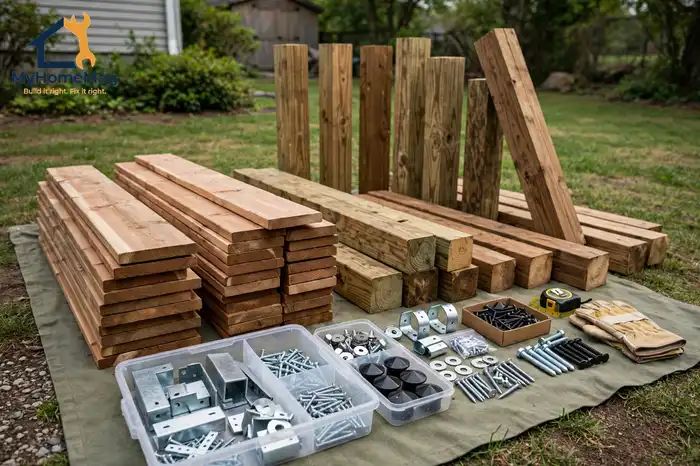
How Fence Installation Cost Is Usually Priced
Most fence contractors price by the linear foot, which means the length of the fence line. A typical quote will give a per-foot price for materials plus labor, and then add gates, removal, and extras separately. For example, a contractor might quote $30 per linear foot for a wood privacy fence, and then add $300 or more for each gate.
However, a per-foot price on its own can be misleading. It may or may not include post concrete, caps, stain, or cleanup. That is why it helps to ask every contractor the same questions: what is included, what is extra, and how are gates, corners, and slopes charged?
Another useful habit is to measure your fence line yourself before you call anyone. Walk the boundary with a long tape, or check a recent survey, and note the total length, the number of gates, and any slopes, trees, or obstacles. That way, you can check whether a quote matches your yard, not just an average yard.
Fence Materials Compared: Cost, Looks, and Upkeep
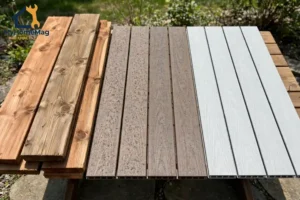
Material is usually the biggest single factor in fence installation cost. The table below compares the most common choices for US homes, with approximate US planning ranges only. These are not quotes, and actual prices vary by region, height, quality, and local labor rates.
| Fence material | Approximate US planning range, installed per linear foot | Typical life and upkeep |
|---|---|---|
| Pressure-treated wood, privacy | $25–$55 | 15–20 years with staining and repairs |
| Cedar wood, privacy | $35–$75 | 20–25 years with regular sealing |
| Vinyl (PVC), privacy | $40–$80 | 20–30 years, low maintenance, wash occasionally |
| Chain-link, galvanized | $15–$35 | 20–25 years, very low maintenance |
| Aluminum, ornamental | $35–$70 | 25–30 years, rust-resistant, low maintenance |
| Steel, ornamental | $45–$90 | 25–30 years, strong, heavier to install |
| Composite, privacy | $50–$90 | 25–30 years, low maintenance, higher upfront cost |
Wood is often the most affordable upfront, especially pressure-treated pine. However, it needs the most care: staining or sealing every few years, and occasional board or post replacement. Cedar costs more but resists rot and insects better, and it looks warm without paint.
Vinyl and composite cost more to buy, but they need very little upkeep beyond washing. For example, a family that does not want to stain a fence every few years may find vinyl cheaper over 20 years, even if the first bill is higher. Chain-link is the budget option for pet containment and boundaries, but it gives little privacy unless slats are added.
Aluminum and steel ornamental fences suit front yards and pool areas, where looks and safety matter. They are strong and long-lasting, but they are not privacy fences, and steep slopes can raise the installation cost because panels must be stepped or racked to follow the ground.
The same cost-versus-upkeep trade-off applies to other outdoor projects. For example, our guide to deck building materials compares upfront and long-term costs for decks in a similar way.
What Drives Fence Installation Cost Up or Down
Even with the same material, two fences can cost very different amounts. The factors below explain most of the difference.
First, length and height matter most. A longer fence needs more materials and labor, and a 6-foot privacy fence costs more than a 4-foot picket fence. Moreover, taller fences often need deeper posts and stronger concrete footings, especially in windy areas.
Second, terrain and access matter. Flat, open ground is fast to work on. A slope, rocky soil, tree roots, or a narrow side yard that cannot fit a truck or auger will slow the job and raise labor costs. For example, digging post holes by hand through roots or rock can add hours to a project.
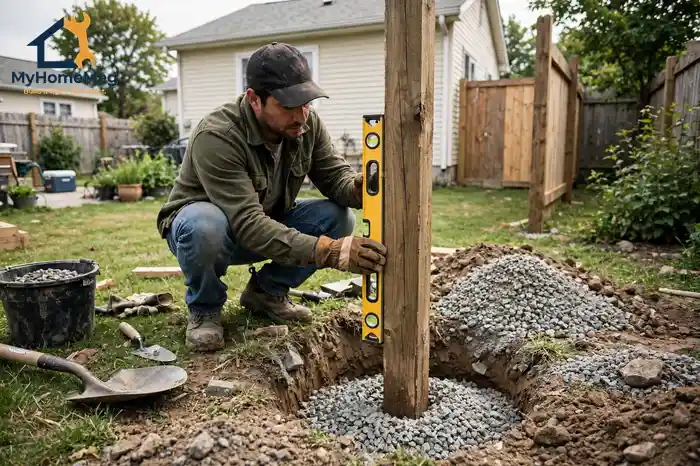
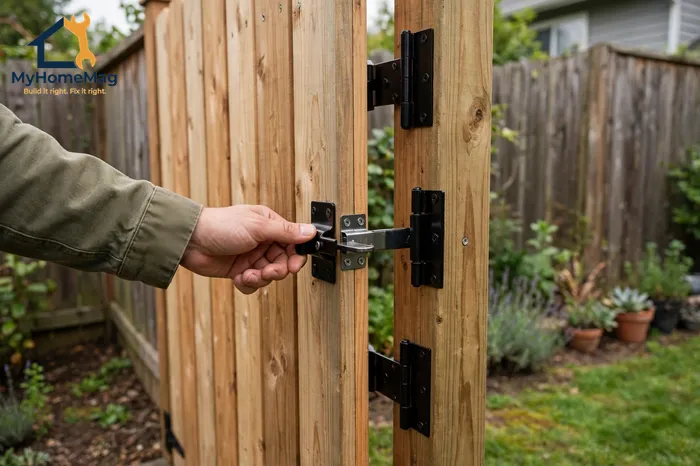
Third, gates and corners add cost. Each gate needs a frame, hinges, a latch, and often a stronger post. A wide double gate for a driveway costs more than a single walk gate. Corners and ends also need braced posts, so a fence with many turns costs more per foot than a straight run.
Fourth, old fence removal and cleanup can be a separate charge. Removing and hauling away an old wood or chain-link fence, plus concrete footings, takes time and disposal fees. Always ask whether removal is included in the quote.
Fifth, local rules, permits, and surveys can add cost. Some towns require a permit for a fence over a certain height, and some require a survey to confirm the property line. A contractor who builds on the wrong line can create a costly neighbor dispute, so a survey is money well spent when the boundary is unclear.
Finally, season and local labor rates play a role. Spring and early summer are busy fence seasons in many areas, and prices can be higher when contractors are booked out. Getting quotes in the off-season, when possible, can sometimes save money — but do not choose a contractor on price alone.
A Simple Way to Estimate Your Fence Installation Cost
You can make a rough budget with three numbers: length, material price, and gates.
Start with your fence length in linear feet. Multiply it by the installed per-foot range for your chosen material from the table above. Then add a gate allowance for each gate, and add removal and permit costs if they apply. For example, a 150-foot pressure-treated wood privacy fence at $40 per foot would be about $6,000 for the fence itself, before gates and extras. A 150-foot vinyl privacy fence at $60 per foot would be about $9,000 on the same basis.
However, treat that total as a planning range, not a promise. Soil, slopes, and local codes can move the final price by hundreds or thousands of dollars. The best next step is to get at least three written quotes, all for the same material, height, length, and gate count, so you can compare them fairly.
It also helps to set aside a contingency of about 10 percent. If the crew hits rock, an old concrete footing, or a buried obstacle, the extra work is easier to handle when it is already in the budget.
Safety and Rules Checklist: Before You Dig or Build
Fence work involves digging, heavy posts, and property lines. Work through this checklist before any post hole is dug.
- Call 811 before you dig. In the US, call 811 or your local one-call center to have underground utilities marked. Never dig where lines are marked, and never assume a yard is clear.
- Confirm the property line. Check a survey, plat map, or recent survey pins. Do not guess the boundary, and talk to neighbors if the fence will sit near a shared line.
- Check local rules and HOA rules. Many towns limit fence height, especially in front yards, and many homeowner associations require approval, a specific material, or a setback from the street.
- Check pool and safety rules. Pool fences often have strict height, gate, and latch rules. Check your local code before you choose a style.
- Get a permit if required. Ask your town or your contractor whether a permit is needed, and who will pull it.
- Plan for gates and access. Make sure gates are wide enough for a mower, wheelbarrow, or trash bins, and that latches are child-safe where needed.
- Stop if you hit something unexpected. If you find a buried pipe, cable, or large concrete footing, stop and check before you force your way through it.
A fence built in the wrong place, or over a utility line, can cost far more to fix than the time it takes to check first.
DIY vs. Hiring a Professional
A DIY fence can save labor costs, and for a short, straight wood or chain-link fence on flat ground, it is a realistic weekend project for a handy homeowner with help. However, DIY still costs materials, tools, concrete, and time, and mistakes — leaning posts, uneven panels, or gates that sag — can be expensive to redo.
A professional is usually the better choice for long fences, slopes, vinyl or composite systems, ornamental metal, pool fences, and any job near a property line or utility line. Professionals also bring post-hole equipment, levels, and experience with local codes, and many offer a workmanship warranty.
If you do hire a pro, ask about the warranty on both materials and labor, how deep posts will be set, whether concrete or gravel footings will be used, and how the crew will handle slopes and gates. Moreover, ask for references and photos of recent local jobs, and check that the contractor is licensed and insured where required.
How to Compare Fence Quotes Fairly
Quotes can look very different even for the same yard, because they include different things. Use this comparison checklist for every quote.
First, confirm the same fence: same material, height, style, length, and number of gates. Second, confirm what is included: posts, concrete, caps, hardware, stain or seal, cleanup, and old fence removal. Third, confirm the extras: permits, survey, grading, and haul-away. Fourth, confirm the schedule: start date, how long the job will take, and what happens in bad weather. Fifth, confirm the warranty and payment terms, and never pay the full amount upfront.
For example, a lower quote that excludes removal, gates, and stain may end up costing more than a higher quote that includes them. A clear, itemized quote is usually a good sign, because it shows the contractor has thought through your yard, not just given a round number.
This quote-comparison approach works for bigger jobs too. Our guide on how much roof replacement costs explains how to weigh quotes, materials, and warranties for large projects.
When to Call a Professional
Call a professional if the boundary is unclear, the ground is rocky or steeply sloped, the fence is for a pool, or the job involves vinyl, composite, or ornamental metal systems. You should also call a pro if you need a permit, if the old fence has concrete footings that are hard to remove, or if you have limited time or help for a long fence line.
Moreover, call a professional if a neighbor dispute is possible. A contractor who works from a survey, and who documents the fence location, can help avoid a disagreement that costs far more than the fence itself.
Maintenance That Protects Your Investment
A fence lasts longer when it is looked after, whatever the material. For wood, that means cleaning, staining or sealing on schedule, and replacing damaged boards before rot spreads. For vinyl and composite, it means washing off dirt and mildew, and checking gates and hardware. For metal, it means checking for rust spots, loose fasteners, and gate sag.
Walk the fence line at least once a year. Look for leaning posts, loose boards, sagging gates, and soil or mulch piled against wood posts, which can speed up rot. Moreover, trim plants and vines away from the fence, and keep sprinklers from soaking wood posts every day. Small repairs done early are almost always cheaper than a full section replacement later.
FAQs
1. How much does fence installation cost per foot?
It depends mainly on material and height. As a rough US planning range, chain-link may be $15–$35 per linear foot installed, pressure-treated wood $25–$55, vinyl $40–$80, and composite $50–$90. Gates, slopes, old fence removal, and permits are often extra, so always ask what a per-foot price includes before you compare quotes.
2. What is the cheapest fence to install?
Chain-link is usually the cheapest installed fence, followed by pressure-treated wood. However, chain-link gives little privacy, and wood needs regular staining and repairs. Over 20 years, a low-maintenance material like vinyl may cost less overall, even if the first bill is higher, so compare lifetime cost, not just day-one cost.
3. How much does a fence gate add to the cost?
A single walk gate often adds $200–$600 or more, depending on material, width, and hardware, while a wide double driveway gate can add $600–$1,500 or more. Gates need stronger posts, frames, hinges, and latches, so they are priced separately from the per-foot fence price in most quotes.
4. Do I need a permit or a survey for a fence?
It depends on your town and your property. Many towns require a permit for fences over a certain height, and many require a setback from streets and sidewalks. A survey is strongly recommended when the property line is unclear or shared with a neighbor. Check your local rules and any HOA rules before you build.
5. How long does fence installation take?
A typical residential fence of 100–200 feet often takes 1–3 days for a professional crew, depending on material, terrain, and gates. Rocky soil, slopes, old fence removal, and bad weather can extend the job. A DIY fence usually takes longer, especially if post holes are dug by hand.
6. Can I install a fence myself to save money?
Yes, for a short, straight fence on flat ground, DIY can save labor costs. However, you still need materials, tools, concrete, and help, and you must call 811 before digging and confirm the property line. For long fences, slopes, pool fences, or vinyl, composite, and metal systems, a professional is usually safer and may give a better long-term result.