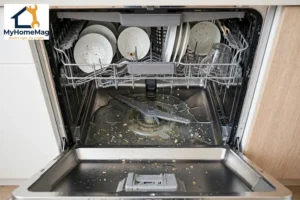
A Bosch dishwasher not draining is frustrating, especially when you open the door to find water sitting in the bottom of the tub. However, most Bosch drainage problems come from a small number of places, and many of them are simple to check at home.
For example, a clogged filter, a kinked drain hose, or a blocked drain pump can all stop water from leaving the machine. Moreover, the way the water behaves often tells you where to look first. In short, slow down, stop the cycle safely, and work through the checks below before you call for help.
This guide is practical and US-focused. It covers the common causes of a Bosch dishwasher not draining, the safety steps to take first, the checks you can do at home, and when it is smarter to call a professional.
Why a Bosch Dishwasher Stops Draining
A Bosch dishwasher moves water in a careful cycle. It fills, washes, drains, and rinses, and every step depends on water leaving the tub on time. When one part of that path is blocked, slowed, or out of place, water stays behind.
Bosch machines are known for quiet operation and efficient washing. That does not make them immune to drainage problems. In fact, the same features that make them efficient can also make a small blockage more noticeable. A filter that is only partly clogged, for instance, may still allow washing but not full draining.
Age matters, but so does use. Hard water, food debris, grease, and a drain hose that has shifted behind the machine can all build up over time. The good news is that a Bosch dishwasher not draining does not always mean a major repair. Sometimes the fix is cleaning a filter, straightening a hose, or clearing a small object from the pump area.
Stop the Cycle First: Safety Checklist
Do these steps before you move the machine or reach into standing water. Water and electricity are a dangerous mix.
- Cancel the cycle and turn the machine off. If the controls are unresponsive, switch the dishwasher off at the breaker.
- Do not reach into dirty standing water with bare hands. Wear gloves, because the water may contain food debris, grease, or sharp objects.
- Check for leaks around the door and underneath. Put towels down if water has escaped onto the floor.
- Do not tilt the machine forward. Tipping a dishwasher can spill more water and damage the drain hose connection.
- Unplug the machine before you open the pump cover. If the plug is hard to reach, turn off the breaker first.
- Stop if you see damage. A damaged cord, a burning smell, scorch marks, or water on electrical parts means call a professional.
Once the machine is off and the area is safe, start looking for the cause.
Common Bosch Drainage Causes at a Glance
| Cause | What you usually see | Most likely fix |
|---|---|---|
| Clogged filter | Water in the tub, poor cleaning, bad smell | Remove, rinse, and refit the filter |
| Kinked or blocked drain hose | Water left after the cycle, slow draining | Straighten, re-seat, or replace the hose |
| Blocked drain pump | Humming, clicking, or no drain sound at all | Clear debris from the pump area |
| Garbage disposal or air gap blockage | New installation, or disposal recently replaced | Clear the disposal knockout or air gap |
| Drain pump failure | Machine runs but never drains | Professional pump replacement |
| Control or sensor fault | Repeated draining failure, error display | Professional diagnosis |
Use this table as a starting point, not as a final diagnosis. The checks below will help you narrow it down.
Check 1: The Bosch Filter
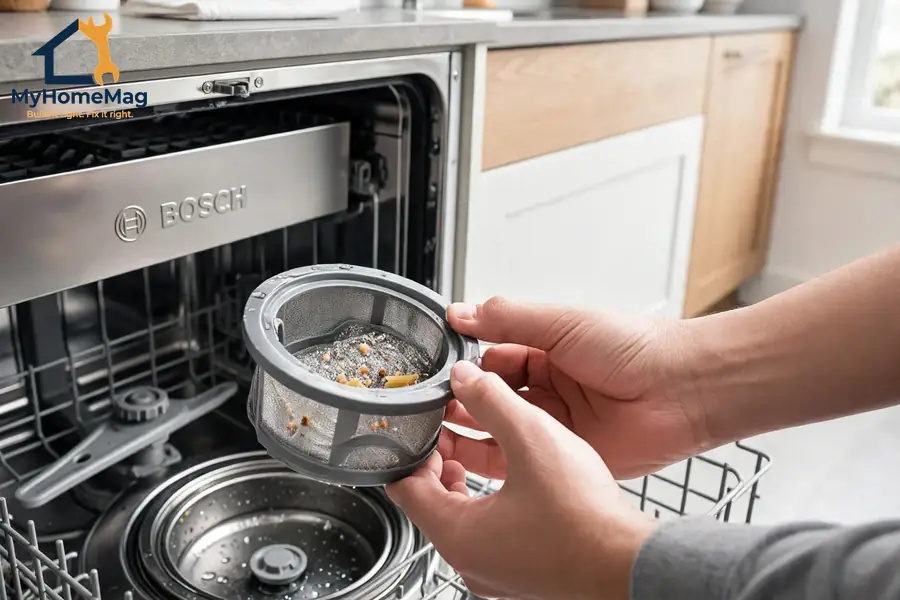
Start with the filter, because it is the most common cause of a Bosch dishwasher not draining, and it is also the easiest to fix. Bosch filters sit at the bottom of the tub, under the lower spray arm in most models.
First, remove the bottom rack so you can reach the filter easily. Then twist the filter assembly counterclockwise and lift it out. You may see two parts: a flat mesh filter and a cylindrical fine filter. Rinse both under warm running water, and use a soft brush for stuck-on food. However, do not use harsh scouring pads, because they can damage the mesh.
Moreover, check the sump area underneath the filter for food, glass, bones, or small utensils. A single olive pit or piece of broken glass can slow draining more than you might expect. Once the filter is clean, refit it firmly and turn it clockwise until it locks. A loose filter can let debris reach the pump, so this step matters.
If the filter was very dirty, run a short rinse cycle with no dishes and watch whether the tub drains fully. For example, if the water level drops to normal after cleaning, you have probably found the problem. Make filter cleaning a regular habit, especially if you often wash heavily soiled dishes.
Check 2: The Drain Hose
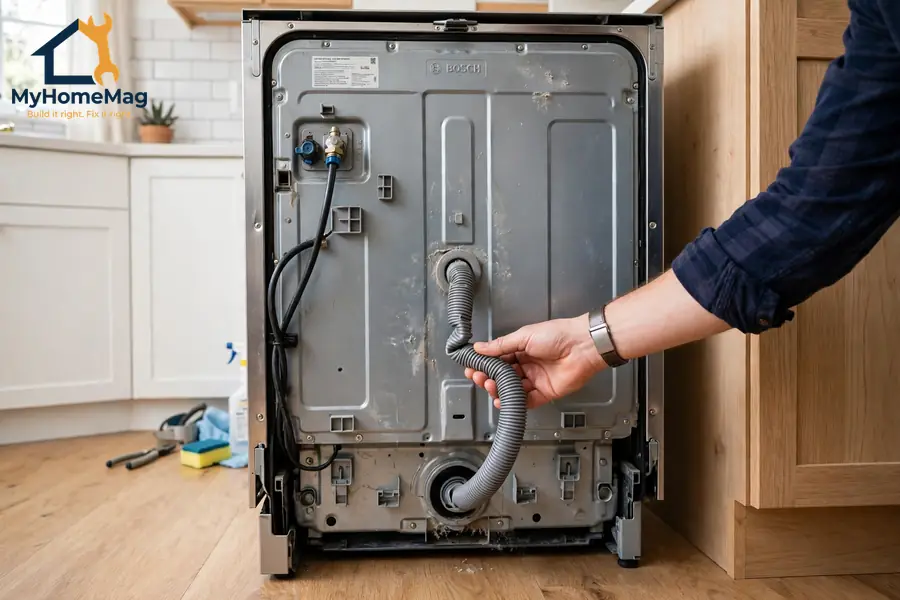
Next, look at the drain hose. On most US installations, the hose runs from the dishwasher to the garbage disposal or to a drain connection under the sink. It should rise in a high loop under the sink, so dirty water cannot flow back into the machine.
Pull the machine out only a little, if you can do so safely, and check the hose for kinks, sharp bends, or pressure against the wall or cabinet. A hose that was fine when the machine was installed can become kinked after the machine is pushed back too far. Straighten any kink gently, and make sure the hose is not crushed.
Also check the connection at the disposal or drain. If a new garbage disposal was recently installed, the drain knockout plug inside the disposal inlet may not have been removed. That is a very common cause of a Bosch dishwasher not draining after a kitchen change. In short, if the problem started right after new disposal work, check that connection first, or ask the installer to confirm it.
Check 3: The Drain Pump and Pump Cover
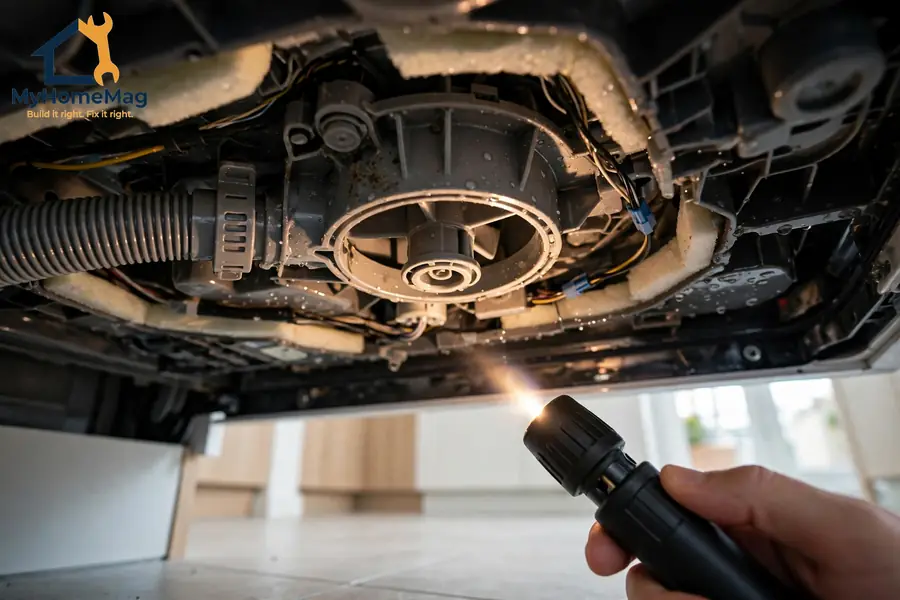
If the filter and hose look fine, the next place to check is the drain pump area. Bosch models usually have a pump cover inside the tub, near the filter. With the power off, remove the filter and look for the small pump cover. You may need to lift a tab or unscrew a small cover, depending on the model, so check your manual for the exact steps.
Look for debris around the pump impeller. Small objects, food, and glass can jam the impeller and stop it from turning. Remove anything you find with gloves, and turn the impeller gently by hand to make sure it moves freely. However, do not force it. If it feels stuck, cracked, or broken, leave it and call a technician.
When you refit the pump cover, make sure it clicks or screws back firmly. A loose cover can cause poor draining. Then replace the filter, restore power, and run a short cycle to test draining.
Check 4: Error Codes and a Hard Reset
Bosch dishwashers may show an error code when draining fails. The exact code varies by model and age, so do not guess what a code means from memory alone. Instead, note the code exactly as shown, then check your model’s manual or the Bosch support site for that code.
In general terms, drainage-related codes often point to a blocked filter, a pump problem, or a water-level issue. That does not prove the part has failed. For example, a code can appear after a single blockage, even if the pump itself is fine. Clear the filter, hose, and pump area first, then see whether the code returns.
A hard reset can also help after a one-off fault. Turn the dishwasher off, switch it off at the breaker for five minutes, then restore power and start a new cycle. Moreover, do not repeat resets over and over if the problem keeps coming back. Repeated faults usually mean a real blockage or a failing part, and a technician should check it.
Check 5: The Air Gap and Sink Drain
If your kitchen has an air gap, a small chrome cylinder on the sink rim, check it as well. The air gap prevents dirty water from flowing back into the dishwasher, but it can become blocked with food and grease. Remove the cap, clean out any debris, and replace it firmly.
Also run the kitchen sink and watch how it drains. If the sink drains slowly or backs up, the problem may be a household drain blockage, not the dishwasher itself. In that case, a plumber is the right call, because clearing a main drain is different from fixing a dishwasher.
Prevention: Small Habits That Keep a Bosch Draining
Prevention is much cheaper than a repair visit.
- Scrape plates before loading, but do not pre-rinse every dish. A little food helps detergent work, while large scraps clog filters.
- Clean the Bosch filter every two to four weeks, or more often with heavy use.
- Run a hot cycle with dishwasher cleaner from time to time, following the product instructions.
- Check the drain hose position after any work under the sink or behind the machine.
- Avoid washing items that can break apart in the machine, such as loose labels, small bones, or cracked glass.
- Keep the door seal clean, so water does not leak and trigger a safety stop.
When to Call a Pro — and What It May Cost
Call a technician if the drain pump is damaged, the impeller will not turn, the machine shows the same error after cleaning, water leaks from underneath, you see electrical damage, or the machine is still under warranty and you do not want to risk voiding it.
The table below gives approximate US planning ranges only. These are not quotes, and actual prices vary by model, parts, and local labor rates.
| Repair | Approximate US planning range |
|---|---|
| Filter cleaning (DIY) | $0, plus time and gloves |
| Drain hose replacement | $50–$150, including parts and labor |
| Drain pump cleaning | $120–$250, including labor |
| Drain pump replacement | $250–$450, including parts and labor |
| Control board or sensor diagnosis | $200–$500, depending on the part |
| Plumber for a blocked household drain | $150–$400, depending on the blockage |
If repair costs approach replacement cost, ask the technician for an honest opinion. A single pump or hose repair is usually worth doing first.
A Practical Final Check Before You Run a Full Load
Before a full load, run a short rinse or drain cycle with no dishes inside, and watch the bottom of the tub. If it drains fully and no error appears, try a small normal load. Moreover, do not ignore a very small amount of standing water. A slow drain can leave food residue, cause smells, and eventually lead to a complete blockage.
FAQs
Why is my Bosch dishwasher not draining all the way?
The most common reasons are a clogged filter, a kinked drain hose, or debris in the drain pump area. Start by cleaning the filter, checking the hose for kinks, and looking for debris near the pump. If those steps do not fix it, the pump or a control fault may need a technician.
How do I clean the filter on a Bosch dishwasher?
Remove the bottom rack, twist the filter counterclockwise, and lift it out. Rinse the mesh and fine filter under warm water, clear debris from the sump, then refit the filter firmly and turn it clockwise until it locks. Clean it every two to four weeks with regular use.
Can a new garbage disposal cause a Bosch dishwasher not draining?
Yes, it can. If a new disposal was installed and the drain knockout plug was not removed, water cannot leave the dishwasher. Check the disposal connection, or ask the installer to confirm the plug was removed, before replacing dishwasher parts.
Should I reset my Bosch dishwasher if it will not drain?
A single hard reset can help after a one-off fault. Turn the machine off at the breaker for five minutes, restore power, and run a new cycle. However, if the same drainage problem returns, do not keep resetting it. Clean the filter, hose, and pump area, and call a technician if the fault persists.
When should I call a technician for a Bosch dishwasher not draining?
Call a technician if the pump is damaged, the impeller will not turn, the same error keeps appearing after cleaning, water leaks underneath, or the machine is under warranty. A pump replacement or control diagnosis is usually a professional job, especially when electrical parts are involved.
Related Guides
- MyHomeMag — practical home guides for every room.
- Appliance Guides — more appliance troubleshooting and care guides.
- Dishwasher Not Draining? Causes, Fixes, and When to Call a Pro — our general dishwasher draining guide.
- What to check when any dishwasher will not drain — causes and fixes that apply beyond Bosch models.