An hvac maintenance checklist sounds like one more chore, but it is really a simple habit that saves money, prevents breakdowns, and keeps your home comfortable. However, many homeowners only think about heating and cooling when something stops working, usually on the hottest or coldest day of the year.
For example, a clogged filter can make a system work much harder than it needs to, while a dirty outdoor unit can cut cooling power in summer. Moreover, small problems found early are almost always cheaper than emergency repairs. In short, a short seasonal routine is the easiest way to protect one of the most expensive systems in your home.
This guide is practical and US-focused. It walks through what to check each season, what you can safely do yourself, what to leave to a professional, and how often each task really needs doing.
You can find more practical guides like this in our Home Systems & Upkeep section here on MyHomeMag.
Why Regular HVAC Maintenance Matters
Your heating, ventilation, and air conditioning system runs for thousands of hours a year. It moves air through ducts, filters, coils, and fans, and it works hardest exactly when you need it most.
Without maintenance, dust builds up, airflow drops, and parts wear out faster. A system that cannot breathe properly may run longer, use more energy, and still leave rooms unevenly heated or cooled. In addition, poor airflow can make indoor air feel stuffy and dusty.
Regular care does not make a system last forever, but it does help it run closer to how it was designed to run.
First, Know Your System
Before you start, find out what type of system you have. Most US homes have one of these:
- A forced-air furnace with central air conditioning, using ducts and vents.
- A heat pump that heats and cools through the same outdoor unit.
- A boiler with radiators or baseboards, plus a separate cooling system or none at all.
- Ductless mini-splits, with one outdoor unit and several indoor wall units.
Your manual is the best source for your exact model. It will show where the filter sits, how to open access panels safely, and what the manufacturer recommends. If you cannot find the manual, the model number on the indoor unit usually lets you find it online from the manufacturer.
Safety Checklist: Before You Touch Anything
Safety comes first, every time. Heating and cooling equipment uses electricity, gas, or both, and some parts stay hot or hold a charge.
- Turn off power at the thermostat and the breaker before opening any panel or touching internal parts.
- Do not open sealed units, gas valves, or refrigerant lines. Those are professional-only areas.
- Let hot parts cool down before you work near a furnace or boiler.
- Stop if you smell gas, see scorch marks, or hear unusual buzzing. Leave the area, do not flip switches, and call a professional or your gas utility.
- Do not run a system with panels removed or with a filter missing for longer than a quick test.
- Keep water away from electrical parts, and dry your hands before touching controls.
If a task feels unclear or unsafe, skip it and add it to a professional visit list. A missed DIY task is far better than a damaged system or an injury.
The Seasonal HVAC Maintenance Checklist
Use this table as your core routine. Do the seasonal tasks at the start of each season, not in the middle of extreme weather.
| Season | Main tasks |
|---|---|
| Spring | Change the filter, clean around the outdoor unit, clear debris and plants, check condensate drain, test cooling before hot weather, check vents and registers |
| Summer | Check the filter monthly, keep the outdoor unit clear, listen for new noises, check for water around the indoor unit, keep vents open and unblocked |
| Fall | Change the filter, test heating before cold weather, clean around the furnace, check carbon monoxide alarms, schedule a professional heating check if due, seal obvious duct leaks you can reach |
| Winter | Check the filter monthly, keep vents clear of furniture and curtains, watch for uneven heating, check for ice on heat pump outdoor units, keep the area around the furnace clear |
Monthly and Quarterly Tasks You Can Do Yourself
Some tasks are quick, and they make the biggest difference.
First, check the filter. Hold it up to the light: if you cannot see light through it, or it looks gray and matted, it is time to change it. Moreover, check it more often if you have pets, allergies, or a dusty home, or if you run the system almost constantly.
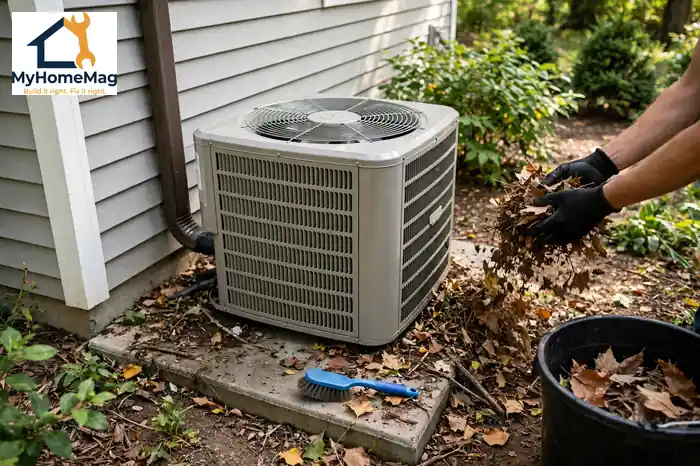
Second, walk around the outdoor unit. Remove leaves, grass clippings, and stored items from around it, and trim plants back so air can flow freely. Do not hose down electrical parts, and do not poke objects into the fan or coils.
Third, check vents and registers inside. Make sure furniture, rugs, and curtains are not blocking them, and wipe dust from the grilles. Closed vents in unused rooms do not save much energy, and they can strain the system, so keep most vents open.
Fourth, listen and look. A new rattle, squeal, or grinding noise, a musty smell, or water pooling near the indoor unit are all worth noting. Write down when they started, because that detail helps a technician diagnose the problem faster.
Furnace Filter Replacement Frequency: How Often Is Often Enough?
One of the most searched questions is furnace filter replacement frequency, and the honest answer is that it depends on the filter, the home, and the season.
As a practical guide:
- Basic fiberglass filters: check every month, change every one to two months.
- Pleated filters: usually every two to three months.
- Homes with pets, smokers, or allergies: check monthly, and change sooner if the filter looks dirty.
- Homes that run heating or cooling almost all day: check monthly in peak seasons.
- Vacation homes or lightly used systems: check at the start of each season at minimum.
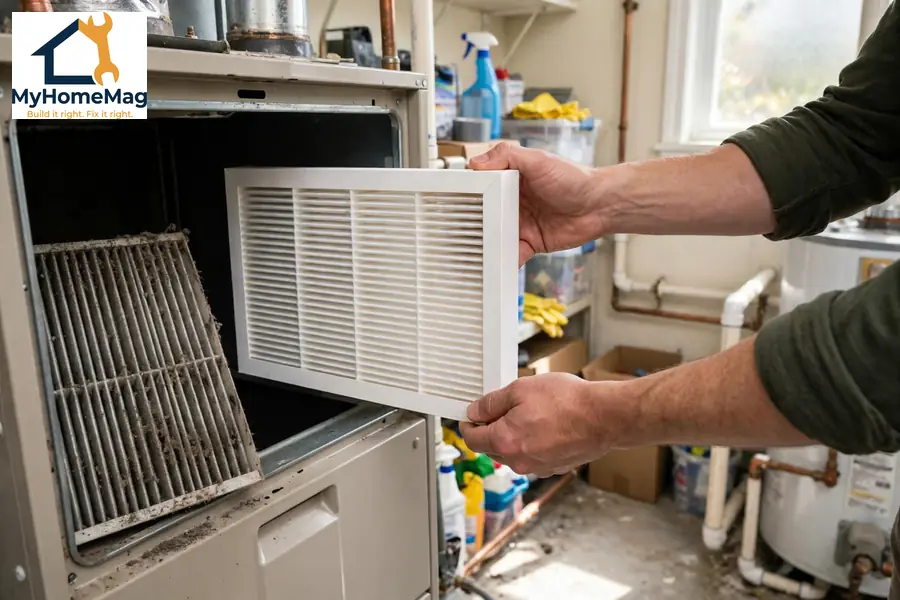
However, do not rely only on a calendar. A filter in a dusty renovation home may need changing in weeks, while a filter in a clean, lightly used home may last longer. The light test above is a better guide than a fixed date.
Also, use the right filter size and type for your system. A filter that is too thick or too restrictive for your equipment can reduce airflow, even if it traps more dust. When in doubt, follow the manual, not the thickest filter on the shelf.
DIY Tasks vs Professional Tasks
It helps to be clear about the line between homeowner care and professional work.
| Task | DIY or pro? |
|---|---|
| Change or clean the filter | DIY, with power off |
| Clear debris around the outdoor unit | DIY, from outside only |
| Clean vents, registers, and the thermostat area | DIY |
| Check and clear a visible condensate drain | DIY if accessible and simple |
| Test heating and cooling at season change | DIY, by running the system briefly |
| Clean indoor and outdoor coils deeply | Pro, in most cases |
| Check refrigerant, gas, and electrical parts | Pro only |
| Inspect heat exchangers, burners, and ductwork inside walls | Pro only |
| Diagnose noises, leaks, or a system that will not start | Pro |
Most technicians suggest a professional check once a year for heating and once a year for cooling, or a combined visit in spring or fall.
What a Professional HVAC Check Usually Covers
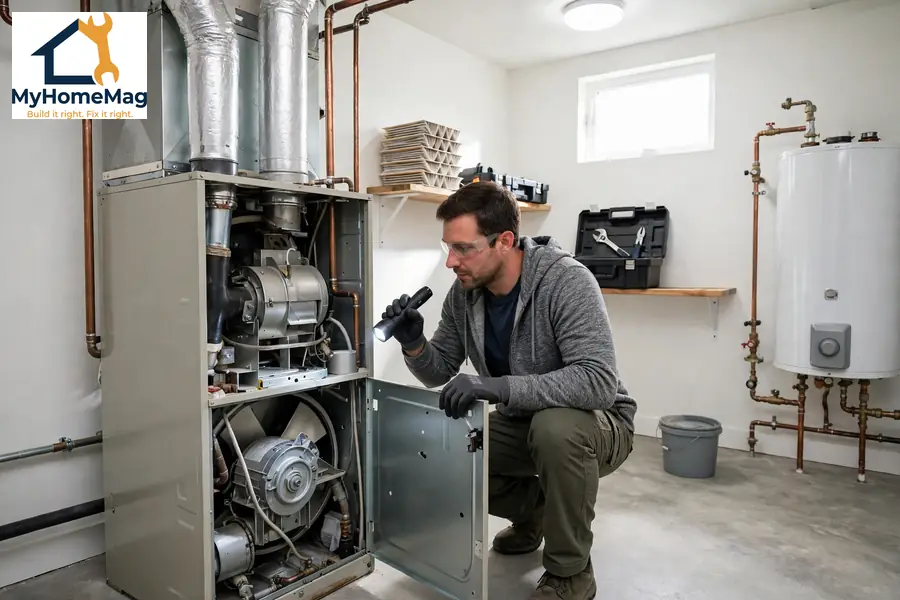
Knowing what to expect helps you ask good questions. A typical professional maintenance visit may include checking electrical connections, testing safety controls, inspecting the blower and motor, checking the condensate drain, measuring airflow and temperature differences, and looking for wear, leaks, or corrosion.
For gas heating, it may also include checking burners, ignition, and carbon monoxide safety. For cooling, it may include checking refrigerant levels and coil condition, without you needing to handle those parts yourself.
Ask the technician to explain recommendations in plain language, and to separate urgent safety items from optional upgrades.
Common Problems This Checklist Helps You Spot Early
A checklist is most useful when it helps you notice change. Watch for these signs between visits:
- Rooms that are suddenly warmer or colder than others.
- A system that turns on and off very often, in short cycles.
- Rising energy bills without a change in weather or use.
- Dust building up quickly after cleaning, or a musty smell when the system runs.
- Water near the indoor unit, or ice on outdoor lines in summer.
- A thermostat that no longer matches the actual room temperature.
If water is the problem rather than air, our guides to washing machine leaks and a dishwasher that will not drain cover similar water troubleshooting and when to call a pro.
Approximate US Costs: Planning Ranges Only
Costs vary widely by region, system type, and how much work is needed. The ranges below are planning ranges only, not quotes.
| Item | Approximate US planning range |
|---|---|
| Replacement filters (each) | $5–$30, depending on size and type |
| Professional maintenance visit | $100–$250 for a standard check |
| Professional heating + cooling annual plan | $150–$400 per year, depending on coverage |
| Thermostat replacement (basic to smart) | $100–$300, including parts and labor in many cases |
| Condensate pump or drain repair | $150–$400, depending on access |
| Blower motor replacement | $400–$900, depending on model |
| Major compressor or heat exchanger work | $1,000 and up, often worth a replacement comparison |
If a repair approaches the cost of a newer, more efficient system, ask for both options in writing.
Keep a Simple Maintenance Log
Note the date, what you checked, the filter size, and anything unusual. Add professional visit dates too. That way you will not guess when the filter was last changed, and a technician can see patterns instead of starting from zero.
A Practical Final Check Before Each Season
Before the first hot week or the first cold snap, run the system for a short test. Set the thermostat to cooling in spring and heating in fall, listen for normal startup sounds, and check that air is flowing from vents in the main rooms.
If airflow is weak, the system makes a new noise, or it will not start, note it and call for help before extreme weather arrives. Moreover, test carbon monoxide alarms at the same time if you have gas heating, and replace batteries as needed.
FAQs
1. How often should I follow an hvac maintenance checklist?
Check the filter monthly in peak seasons, and run the full seasonal checklist at the start of spring, summer, fall, and winter. A professional check once a year for heating and once a year for cooling is a common schedule, or a combined visit in spring or fall.
2. What is the right furnace filter replacement frequency for my home?
For most homes, pleated filters last two to three months and basic fiberglass filters last one to two months. Check monthly if you have pets, allergies, or heavy system use, and change the filter sooner if you cannot see light through it.
3. Can I do HVAC maintenance myself, or do I need a professional?
You can safely change filters, clear debris around the outdoor unit, clean vents, and test the system at season change, with power off. Leave refrigerant, gas, electrical, and sealed internal parts to a professional, and call one if you smell gas, see scorch marks, or hear unusual buzzing.
4. What happens if I never change my HVAC filter?
A clogged filter reduces airflow, makes the system work harder, and can lead to uneven temperatures, higher energy use, and extra wear. In severe cases it can cause freezing on cooling coils or overheating on heating equipment, so regular filter checks are the single most useful DIY task.
5. When is the best time to schedule professional HVAC maintenance?
Spring is ideal for cooling checks and fall is ideal for heating checks, before extreme weather arrives. Booking early in the season also avoids the rush when systems fail on the hottest or coldest days.
6. How do I know if my HVAC system needs repair instead of maintenance?
Call a technician if the system will not start, cycles on and off very often, leaks water, makes grinding or squealing noises, smells of gas or burning, or leaves rooms very unevenly heated or cooled. Maintenance keeps a healthy system healthy, but it does not fix a fault that needs repair.