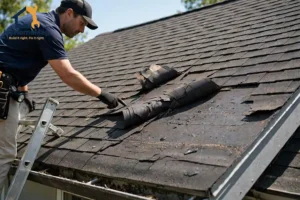
A new roof is one of the largest home expenses most owners will face, and it is also one of the hardest to price from a single quote. Two houses on the same street can get very different prices, even when both roofs look similar from the ground. Size, pitch, material, layers, and local labor all change the total, and that is why a single number in an advertisement rarely tells the whole story.
If you are asking about how much roof replacement costs in 2026, use our detailed cost guide — How Much Does Roof Replacement Cost? — for a detailed breakdown by material and roof size. The rest of this guide focuses on something else: the signs that mean your roof is reaching the end of its life and repair is no longer enough.
The signs below matter most when several appear together, or when they are spread across the roof rather than in one small patch. A single damaged shingle, one lifted flashing, or one small stain is usually a repair, not a reason to replace the whole roof. Widespread curling, repeated leaks, or daylight in the attic tell a different story: the roofing system itself is wearing out.
Signs You Need a New Roof, Not Just a Repair
A single leak does not always mean a full replacement. A small, isolated problem — one damaged flashing, one cracked shingle, or a single blocked valley — can often be repaired for far less than a full replacement. The question is whether the problem is isolated or part of a wider pattern.
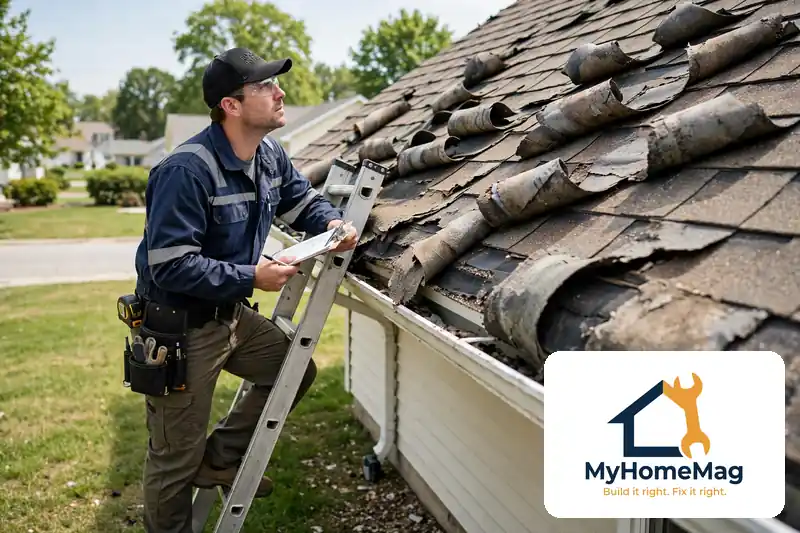
Look for shingles that are curling, cracking, or losing large amounts of granules. Granules in the gutters or at the base of downspouts are a common early sign that asphalt shingles are wearing thin. Missing shingles after a storm are less worrying if they are limited to one area, but patches of missing or damaged shingles across the roof suggest the material is failing.
Daylight visible through the roof boards from the attic is a clear warning sign: it means there are gaps in the roof structure itself. A sagging roof deck — a dip or a curve in the roofline — is another serious sign, because it can mean the decking or structure below is weakened. Both need a professional inspection without delay.
Inside the house, watch for water stains on ceilings, peeling paint near the roofline, or a musty smell in the attic. These can appear even when the roof looks fine from the outside. Repeated leaks in the same place, after it has already been repaired, are another strong sign that a patch is no longer enough.
Age is the other key factor. An asphalt roof near the end of its expected life, with widespread wear, is a candidate for replacement even if it is not leaking yet. Metal and tile roofs last longer, but they also show wear — loose fasteners, cracked tiles, or rust — and those signs matter just as much.
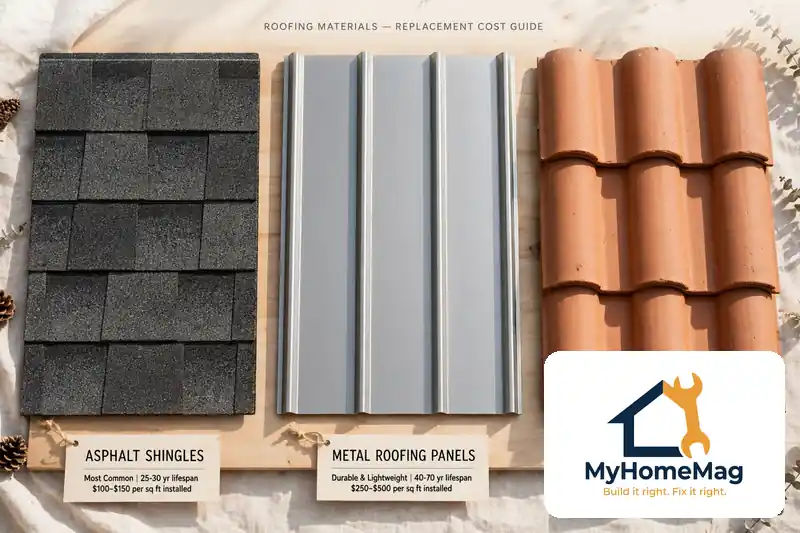
Roof age is a useful starting point, not a rule. A typical asphalt shingle roof lasts about 20 years, while some architectural shingles can last 25 to 30 years with good care. Metal roofs often last 40 to 70 years, and tile and slate can last longer still. The age tells you whether replacement is likely; the signs above tell you whether it is needed. If you want a structured way to check, use the Roof Inspection Checklist on MyHomeMag before you call a contractor.
Roof Replacement Materials at a Glance
Material choice is the second biggest decision after size, because it affects both cost and lifespan. Architectural asphalt shingles suit most US homes, metal lasts longer in harsh weather, and tile or slate suit owners who plan to stay for decades. This table is a guide, not a quote — check local prices and availability before you decide.
| Material | Typical cost level | Typical lifespan guidance | Best for |
|---|---|---|---|
| Three-tab asphalt shingles | Lowest | Shorter than architectural shingles | Tight budgets, simple roofs |
| Architectural asphalt shingles | Low to moderate | Longer than three-tab, widely used | Most US homes, good value |
| Metal roofing | Moderate to high | Long, often decades | Long-term ownership, harsh weather |
| Tile roofing | High | Very long, if structure allows | Warm climates, heavy-structure homes |
| Slate roofing | Highest | Very long, specialist work | Long-term, premium homes |
| Wood shakes | Moderate to high | Varies, needs maintenance | Natural look, suitable climates only |
Metal roofing costs more upfront, but it can last much longer. Metal roofing can perform well in snow, wind, and fire conditions when the right profile is installed by experienced roofers and local code is met. Architectural asphalt shingles are the common middle ground in the US: they are widely available, they suit most roof shapes, and they cost less than metal or tile.
Installation quality, ventilation, and climate matter as much as the material itself.
What a Replacement Costs — in Brief
A full replacement covers tear-off and disposal, deck inspection and repair, underlayment, flashing, drip edge, ventilation, and the new roofing material itself. The most useful way to think about it is this: you are paying for a system, not a single layer, and every layer has to work together.
To compare quotes fairly, ask every roofer to price the same scope: tear-off, disposal, deck repair, underlayment, flashing, ventilation, and the new material. A cheap quote that leaves out tear-off or ventilation is not cheaper — it is incomplete.
For a typical single-family home, a full asphalt shingle replacement often falls in an approximate range of $8,000 to $20,000 or more, metal often roughly $15,000 to $35,000 or more, and tile or slate often higher again. If you want exact figures for your roof size and material, see How Much Does Roof Replacement Cost? on MyHomeMag.
How Long Does Replacement Take?
For most single-family homes, a straightforward asphalt shingle replacement takes one to three days, including tear-off and cleanup. Larger, steeper, or more complex roofs take longer, and metal, tile, or slate jobs can take a week or more.
Weather is the main cause of delay. A crew should not tear off more roof than it can make watertight in the same day, and a good contractor will plan the job around the forecast rather than tearing everything off at once.
Ask for a realistic schedule, not just a start date: what happens if rain is forecast mid-job, and how will the crew protect the house overnight?
Questions to Ask a Roofer, and Red Flags in Quotes
Before you sign, ask for proof of license and insurance where required in your state, and check references from recent jobs. A contractor who cannot provide these is not worth the risk.
Ask these questions in writing, and keep the answers with the quote:
- What exactly is included in the price — tear-off, disposal, deck repair, underlayment, flashing, drip edge, ventilation, and the new material?
- Which roofing material and brand will be used, and what is the warranty on both the material and the workmanship?
- How will the crew protect the house, garden, and driveway during the job, and who cleans up afterwards?
- What happens if the decking underneath is damaged, and how is that charged?
- Who is responsible for permits and inspections, and are those costs included?
- What is the payment schedule, and how much is due upfront?
- How long will the job take, and what happens if the weather changes mid-job?

Red flags include pressure to sign the same day, a request for full payment upfront, a quote with no written scope, and a price far below every other quote. A low price can mean missing work, cheap materials, or no warranty — and the cheapest quote is often the most expensive one in the end.
Roof Replacement Warranty: What to Check
A roof usually has two warranties, and they cover different things. The manufacturer’s warranty covers the roofing material itself, for example against defects in the shingles or panels. The workmanship warranty covers the installation — how the roof was put on — and it is usually shorter, often five to ten years.
Read both before you decide: a long material warranty does not help much if poor installation is the cause of a leak, and a short workmanship warranty may mean the contractor is not confident in their own work. Ask who handles a claim, and what is excluded.
In addition, keep all paperwork after the job: the contract, material receipts, warranty documents, and photos. If a problem appears later, this paperwork is what makes a warranty claim possible.
Safety, Permits, and When Not to Do It Yourself
Roof replacement is not a typical DIY job. Falls are a serious risk, and a poorly installed roof can leak, void a warranty, or fail an inspection. Most owners are better off hiring a licensed roofer with insurance.
Do not climb onto a steep, wet, or damaged roof to inspect it yourself. Use binoculars from the ground, check the attic with a flashlight, and look for interior stains. If you suspect structural sagging, active leaking near wiring, or storm damage, call a professional and keep people away from the affected area until it is assessed.
Permits are usually required for a full replacement, and the contractor normally arranges them. Ask who is responsible for permits and inspection, and do not accept a job that skips them — an unpermitted roof can cause problems when you sell the house.
A Simple Plan to Follow
In short, start with the signs: age, widespread wear, repeated leaks, and attic or ceiling clues. Then confirm the cost and scope with our detailed cost guide — How Much Does Roof Replacement Cost? — and get at least three written, like-for-like quotes.
Compare material, scope, warranty, and total price together, not price alone. Ask about deck repair, ventilation, and disposal, and check that every quote includes the same work.
The best roofing quote is not necessarily the cheapest, most expensive, or middle-priced option. It is the one that has the clearest scope, the best warranty, and a contractor who answers your questions clearly.
A new roof is a long-term investment. Taking a few extra days to compare scope and warranty is worth it when the roof should last 20 years or more.
Frequently Asked Questions
How much does a new roof cost in 2026?
It depends mainly on size, material, and complexity. As an approximate US planning range, asphalt shingle replacement for a typical single-family home often falls between $8,000 and $20,000, metal often between $15,000 and $35,000, and tile or slate often higher again. Get written, like-for-like quotes for your own roof before deciding.
How long does a new roof last?
It depends on the material and how well the roof is installed and ventilated. As a rough guide, asphalt shingles last about 20 years, some architectural shingles 25 to 30 years, metal often 40 to 70 years, and tile and slate longer still. The exact figure depends on the product, the climate, and the quality of the installation.
How long does roof replacement take?
A straightforward asphalt job often takes one to three days, while larger, steeper, or specialist-material jobs can take a week or more. Weather is the most common cause of delay, so ask for a realistic schedule, not just a start date.
What is the best time of year to replace a roof?
Late spring through early autumn is usually best, because the weather is more settled and materials seal well. Winter work is possible in mild climates, but it is slower and more weather-dependent. Plan ahead if you can, and book early in the busy season.
Sources
- InterNACHI — International Association of Certified Home Inspectors
- US Department of Energy
- US Environmental Protection Agency
- The Home Depot
For more practical home guides, visit the MyHomeMag homepage or browse the Exterior Home Improvement category.