A new roof is one of the largest home expenses most owners will face, and it is also one of the hardest to price from a single quote. Two houses on the same street can get very different prices, even when both roofs look similar from the ground. Size, pitch, material, layers, and local labour all change the total, and that is why a single number in an advertisement rarely tells the whole story.
If you are asking about roof replacement cost, the right question is not only “how much?” but “how much for what, exactly?” A quote that includes tear-off, disposal, underlayment, flashing, and ventilation is not the same as a quote that only covers shingles. Moreover, a cheaper roof that fails early can cost far more than a well-installed roof at a fair price.
This guide walks through what drives roof replacement cost, how materials compare, the warning signs that mean repair is no longer enough, and the questions to ask a roofer before you sign. For example, you will learn how to compare quotes line by line, what a warranty really covers, and how long a typical replacement takes.
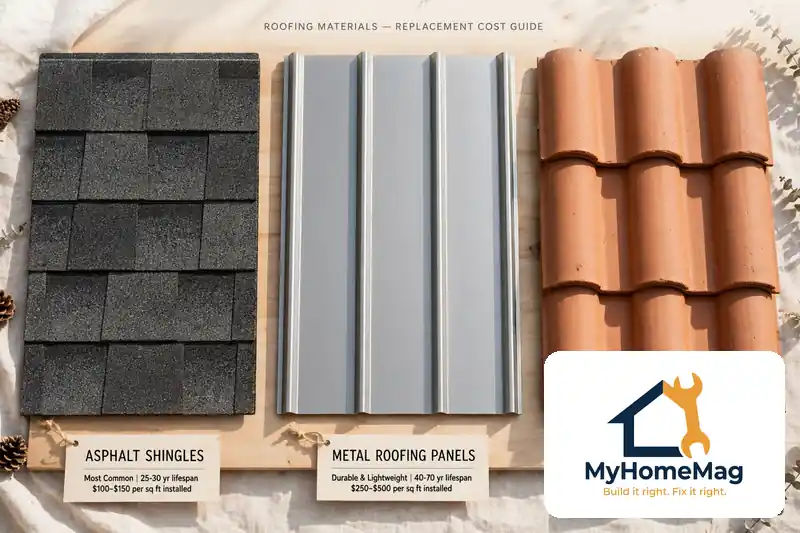
What Roof Replacement Cost Actually Covers
A full replacement is more than new shingles on top of an old roof. In most cases, the old roofing is removed, the deck underneath is checked, and the whole system is rebuilt in layers.
First, the crew removes the old material and disposes of it. Then they inspect the roof deck — the boards or plywood under the roofing — and replace any soft, rotted, or damaged sections. After that, they install underlayment, ice and water protection where needed, flashing around chimneys, vents, and valleys, and finally the new roofing material itself.
In addition, a good job includes ventilation work, drip edge, and ridge caps. These are easy to overlook in a quote, but they protect the roof for its full life. If a quote does not mention them, ask. A roof is a system, not a single layer, and every layer has to work together.
What Drives the Price Up or Down?
Roof size is the biggest driver. Roofers often measure in “squares,” where one square covers 100 square feet. A larger roof simply needs more material and more labour, so a small cottage and a large two-storey home will never cost the same.
Pitch matters too. A steep roof takes longer to work on safely, needs more safety equipment, and can slow the crew down. Similarly, a roof with many valleys, dormers, chimneys, and skylights needs more flashing and more careful cutting, which adds labour.
The number of old layers also changes the price. Removing two layers takes more time and creates more waste than removing one. In some areas, building rules limit how many layers a roof can have, so a full tear-off may be required even if an overlay looks cheaper at first.
Location and access play a part as well. Labour rates vary by region, and a house that is hard to reach, or where a dumpster cannot be placed close by, can add handling time. Moreover, the season can affect scheduling, though it should not be used to pressure you into a rushed decision.
| Cost driver | Why it changes the price | What to check in your quote |
|---|---|---|
| Roof size in squares | More material and labour | Total squares, not just house size |
| Pitch and complexity | Steeper, cut-up roofs take longer | Extra labour for steep or complex roofs |
| Material choice | Materials range widely in price and life | Exact product name and warranty |
| Old layers to remove | Tear-off and disposal take time | Whether tear-off and disposal are included |
| Deck repairs | Rotten boards must be replaced | How deck repair is priced, per board or per sheet |
| Flashing and ventilation | Protects valleys, chimneys, and the attic | Flashing, drip edge, ridge vent, and underlayment listed |
| Permits and access | Local rules and site conditions vary | Permit fees and inspection responsibility |
Roof Replacement Materials at a Glance
Material choice is the second biggest decision after size, because it affects both cost and lifespan. Asphalt shingles are the most common choice in the United States, largely because they are affordable, widely available, and straightforward to install. Architectural asphalt shingles cost more than basic three-tab shingles, but they usually look better and last longer.
Metal roofing costs more upfront, but it can last much longer and handles snow, wind, and fire well, if installed by experienced roofers. Tile and slate are at the top of the price range and are heavy, so the roof structure must be able to carry them. Wood shakes give a natural look, but they need more maintenance. In short, there is no single best material — only the best fit for your climate, budget, house structure, and how long you plan to stay.
| Material | Typical cost level | Typical lifespan guidance | Best for |
|---|---|---|---|
| Three-tab asphalt shingles | Lowest | Shorter than architectural shingles | Tight budgets, simple roofs |
| Architectural asphalt shingles | Low to moderate | Longer than three-tab, widely used | Most US homes, good value |
| Metal roofing | Moderate to high | Long, often decades | Long-term ownership, harsh weather |
| Tile roofing | High | Very long, if structure allows | Warm climates, heavy-structure homes |
| Slate roofing | Highest | Very long, specialist work | Long-term, premium homes |
| Wood shakes | Moderate to high | Varies, needs maintenance | Natural look, suitable climates only |
Installation quality, ventilation, and climate matter as much as the material itself.
Signs You Need a New Roof, Not Just a Repair
A single leak does not always mean a full replacement. A small, isolated problem — one damaged flashing, a few missing shingles after a storm — can often be repaired. However, several signs together usually point to replacement.
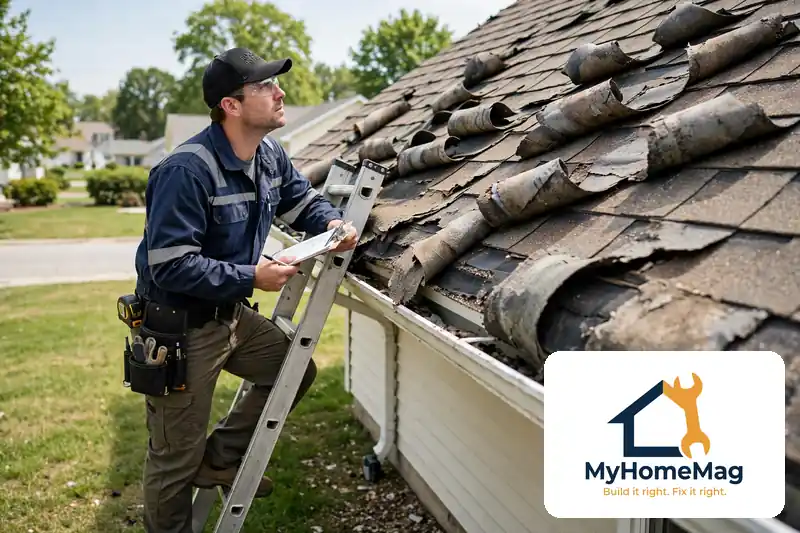
Look for shingles that are curling, cracking, or losing large amounts of granules. Granules in the gutters are normal in small amounts on a new roof, but heavy, ongoing loss on an older roof is a warning sign. Similarly, if you see daylight through the roof boards in the attic, or sagging sections, call a professional promptly and do not climb onto the roof yourself.
Inside the house, watch for water stains on ceilings, peeling paint near the roofline, or a musty smell in the attic. For example, a stain that keeps coming back after a repair often means the problem is wider than one spot. Moss and algae growth alone do not always mean replacement, but heavy moss that traps moisture can shorten a roof’s life.
Age is the other key factor. An asphalt roof near the end of its expected life, with widespread wear, is usually a better candidate for replacement than for another patch.
How Much Does Roof Replacement Cost?
So, how much does roof replacement cost in practice? The honest answer is that it varies widely, and the ranges below are approximate US planning ranges, not quotes. Your final price depends on your roof size, material, region, and the scope in the quote.
For a typical single-family home, a full asphalt shingle replacement often falls in an approximate range of $8,000 to $20,000 or more. Architectural shingles sit toward the middle and upper part of that range, while basic three-tab shingles sit lower. A metal roof for the same home is often roughly $15,000 to $35,000 or more, depending on the metal type and profile. Tile and slate are higher again, and can run well above those ranges, especially when structural work is needed.
To compare quotes fairly, ask every roofer to price the same scope: tear-off, disposal, deck repair terms, underlayment, flashing, ventilation, material name, and warranty. Then compare the total, the scope, and the warranty together — not just the bottom line. Get at least three written quotes, and be wary of a quote that is far below the others without a clear reason. It may be missing layers, using a thinner product, or leaving out disposal and permits.
How Long Does Roof Replacement Take?
For most single-family homes, a straightforward asphalt shingle replacement takes one to three days once work starts. Larger, steeper, or more complex roofs can take longer, and tile, slate, or metal work usually takes more time than asphalt.
Weather is the main cause of delay. A crew should not tear off more roof than it can make watertight by the end of the day, and rain, high wind, or extreme heat can pause work. In addition, deck repairs found during tear-off can add time, because damaged boards have to be replaced before new roofing goes on.
Ask for a realistic schedule, not just a start date: what happens if rain is forecast mid-job, and how the roof will be protected overnight.
Questions to Ask a Roofer, and Red Flags in Quotes
Before you sign, ask for proof of licence and insurance where required in your state, and check references for similar jobs. Ask how long the company has been in business, who will supervise the job on site, and whether subcontractors will be used.
Ask these questions in writing, and keep the answers with the quote:
- What exact material, brand, and product line are you quoting?
- Does the price include tear-off, disposal, underlayment, flashing, drip edge, and ventilation?
- How is deck repair priced, and what happens if rot is found during tear-off?
- What is the workmanship warranty, separate from the manufacturer’s material warranty?
- Who arranges permits and inspection, and are those fees included?
- How will you protect landscaping, gutters, and the attic during the job?
- What is the payment schedule, and what is due only after completion and inspection?

Red flags include pressure to sign the same day, a request for full payment upfront, a quote with no material name, no warranty in writing, or a price that depends on you signing before the roofer leaves. Moreover, be careful with door-to-door offers after a storm that promise a “free roof” through insurance without a clear, written scope. Insurance may cover storm damage in some cases, but the claim, the scope, and the deductible should all be clear before work starts.
Roof Replacement Warranty: What to Check
A roof usually has two warranties, and they cover different things. The manufacturer’s warranty covers the material itself, often for a set number of years, and sometimes with conditions about installation and ventilation. The workmanship warranty covers the installer’s labour, and it is usually much shorter.
Read both before you decide: a long material warranty does not help much if poor installation is the problem and the workmanship warranty has already expired. Ask whether the warranty is transferable, what voids it, and who you call for a claim.
In addition, keep all paperwork after the job: the contract, material receipts, warranty documents, and inspection reports. You will need them for a future claim, a sale, or an insurance question.
Safety, Permits, and When Not to Do It Yourself
Roof replacement is not a typical DIY job. Falls are a serious risk, and a poorly installed roof can leak for years before the damage shows inside. Most owners should hire a licensed, insured roofer for a full replacement, even if they are comfortable with smaller home repairs.
Do not climb onto a steep, wet, or damaged roof to inspect it yourself. Use binoculars from the ground, check the attic with a torch, and look for interior stains. If you suspect structural sagging, active leaking near wiring, or storm damage, call a professional and keep people away from the affected area until it is assessed.
A Simple Plan to Follow
In short, start with the signs: age, widespread wear, repeated leaks, and attic or ceiling clues. Then get your roof measured and get at least three written quotes for the same scope.
Compare material, scope, warranty, and total price together, not price alone. Ask about deck repair terms, flashing, ventilation, permits, and cleanup, and get every promise in writing.
Moreover, plan the timing around weather and your own schedule, and keep all documents after the job. For example, a homeowner who compares three like-for-like quotes often finds that the middle quote, with the clearest scope and warranty, is the best value — even when it is not the cheapest.
A new roof is a long-term investment. Taking a few extra days to compare scope and warranty is worth far more than rushing into the lowest price.
Frequently Asked Questions
How much does roof replacement cost?
It depends mainly on size, material, and complexity. As an approximate US planning range, asphalt shingle replacement for a typical single-family home often falls between $8,000 and $20,000 or more, metal often roughly $15,000 to $35,000 or more, and tile or slate higher again. Get written, like-for-like quotes for your own roof before deciding.
How long does roof replacement take?
A straightforward asphalt job often takes one to three days, while larger, steeper, or specialist-material roofs take longer. Weather and deck repairs found during tear-off are the most common causes of delay.
Is metal roofing better than asphalt shingles?
Metal usually lasts longer and handles harsh weather well, but it costs more upfront and needs experienced installers. Asphalt is more affordable and widely available. The best choice depends on your budget, climate, house structure, and how long you plan to stay in the home.
Can a new roof be installed over the old one?
Sometimes, but not always. Local rules may limit layers, and an overlay can hide deck damage and add weight. A full tear-off costs more upfront, but it lets the crew inspect and repair the deck and install a complete new system. Ask your roofer and local authority what is allowed for your home.
Sources
For more practical home guides, visit the MyHomeMag homepage or browse the Exterior Home Improvement category.