There is nothing quite as annoying as opening the dishwasher after a full cycle and finding a shallow pool of murky water at the bottom. The dishes may look clean, but the water has nowhere to go, and the smell can turn unpleasant fast.
If your dishwasher is not draining, the good news is that many causes are simple. A blocked filter, a kinked hose, or a disposal that was never cleared can stop the whole drain cycle. Moreover, most of these checks take less than an hour and need only basic tools.
However, a dishwasher that will not drain is not just a nuisance. Standing water can stain dishes and encourage odour. In short, fix it early.
This guide walks through how a dishwasher drains, the most common causes, and safe steps you can try at home. For example, you will learn how to check the filter, the drain hose, and the sink connection, and when to call a professional.
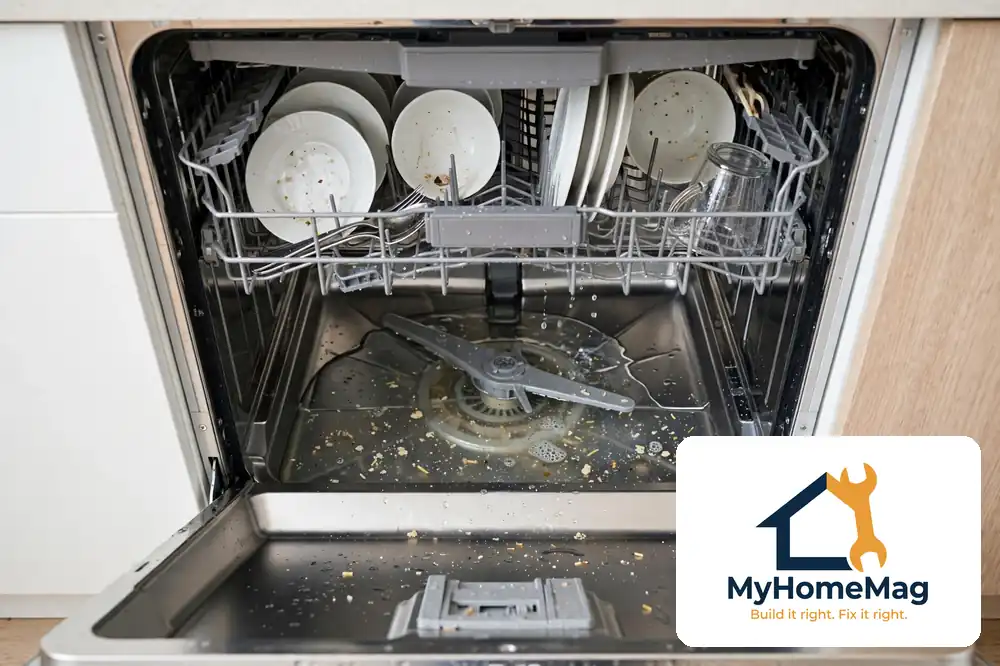
Standing water after a cycle is the clearest sign your dishwasher is not draining.
How a Dishwasher Drains
A dishwasher does not drain by gravity alone. During the drain part of the cycle, a pump pushes dirty water out through a hose and into your home’s plumbing, usually through the garbage disposal or a dedicated drain connection under the sink.
First, water collects in a sump at the bottom of the tub. Then the drain pump activates, and the water travels through the filter area and out of the machine. From there, it should flow freely to the disposal or drain pipe and onward to your main drain.
When any part of that path is blocked, water stays behind. Sometimes the machine finishes anyway, leaving a puddle. Other times it stops or shows a drain error.
Troubleshoot in that order, from the easiest checks inside the tub to the hose under the sink, so you do not take the machine apart before ruling out a simple clog.
Signs Your Dishwasher Is Not Draining Properly
Standing water is the clearest sign, but it is not the only one. You might also notice dishes that feel gritty, glasses with a filmy residue, or a sour smell when you open the door.
Another clue is slow draining, gurgling from the sink, or water backing up into the sink when the dishwasher runs. For example, if the sink itself drains slowly, the shared drain may be partly blocked. If water is leaking onto the floor, stop the cycle and turn the machine off.
Common Causes at a Glance
| Cause | What you may notice | First safe check |
|---|---|---|
| Clogged filter | Gritty dishes, standing water, odour | Remove and rinse the filter |
| Dishwasher drain hose clogged or kinked | Water left after the cycle, slow draining | Check the hose under the sink for kinks or blockages |
| Garbage disposal not cleared | New dishwasher will not drain at all | Clear the disposal and check the knockout plug on a new install |
| Blocked air gap or high loop problem | Water backing up into the sink | Clean the air gap cap, if fitted, and check the hose loop |
| Faulty drain pump | Humming, no draining, error code | Listen for the pump, then stop if it sounds strained |
| Clogged drain or disposal outlet | Sink and dishwasher both drain slowly | Check whether the sink drains normally on its own |
This table is a starting point, not a diagnosis. A filter problem can look much like a hose problem at first, so work through the checks in order.
Safety First: Before You Touch Anything
Do not reach into standing water while the machine is powered on. A pump can start unexpectedly during a cycle.
Use this short safety checklist before any check in this guide:
- Turn the dishwasher off at the control panel, and switch off its breaker or unplug it if you can reach the plug safely.
- Turn off the water supply to the dishwasher, usually a small valve under the sink, if you plan to disconnect a hose.
- Put towels on the floor and have a shallow tray or bowl ready, because some water will spill when you remove the filter or loosen a hose.
- Let the water cool if the cycle just finished, so you do not scald your hands.
- Wear rubber gloves, especially if the water looks dirty or has food debris in it.
- If you smell burning, see sparking, or find damaged wiring, stop and call a professional. Do not try to repair electrical parts yourself.
Moreover, keep children and pets away from the open machine while you work.
Check 1: The Filter
The filter is the most common culprit, and it is also the easiest to check. It sits at the bottom of the tub, usually under the lower spray arm, and it catches food particles before they reach the pump.
Twist or lift the filter out, following your model’s manual, and rinse it under warm running water. Use a soft brush to remove stuck-on food, grease, and fine grit. If the mesh looks torn or warped, note that for replacement rather than forcing it back into place.
For example, a filter that has not been cleaned for months can look surprisingly clogged. A quick rinse often restores draining and reduces odour.
However, do not run the dishwasher without the filter in place. It protects the pump from debris that is far more expensive to replace. Check it every few weeks if you cook often.
Check 2: The Drain Hose
If the filter is clean, the next place to look is the drain hose. This is the flexible hose that runs from the dishwasher to the disposal or drain under the sink.
First, look under the sink for obvious kinks, sharp bends, or a hose that has been squashed by stored items. A kink can slow draining just as surely as a clog, and it is easy to miss if the cabinet is crowded.
A dishwasher drain hose clogged with grease or food is another common cause. You may not see inside it, but check whether water flows when the machine drains, and whether it feels blocked in one spot.
If you disconnect the hose, do it slowly over a tray, and keep the towels ready. Some water will come out, and that is normal. Rinse the hose if your manual allows it, and check both ends for debris before reconnecting it firmly.
In addition, check that the hose rises in a high loop under the sink, or connects through an air gap where required. A hose that has fallen flat can cause backflow and slow draining.
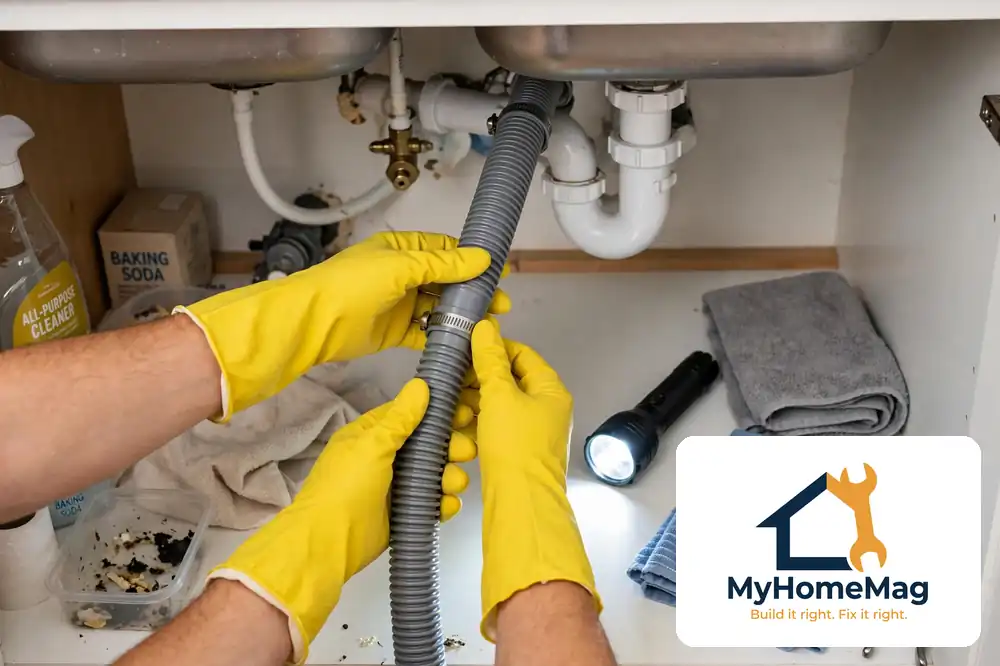
A kinked or dishwasher drain hose clogged under the sink can stop draining even when the filter is clean.
Check 3: The Garbage Disposal Connection
Many dishwashers drain through the garbage disposal, and that connection causes a surprising number of drain problems, especially after a new installation.
If you recently installed a new disposal, or a new dishwasher, check whether the disposal’s drain plug was removed. On a new disposal, a small plastic knockout plug blocks the dishwasher inlet until it is knocked out during installation. If it was left in place, the dishwasher cannot drain at all.
Even with an older disposal, food buildup in its outlet can slow the drain. Run it briefly with cold water and see whether draining improves. However, if it is jammed, humming, or leaking, do not force it.
Check 4: The Air Gap and Sink Drain
Some homes have a small air gap fitting on the sink or countertop, usually a short chrome cylinder near the faucet. Its job is to prevent dirty water from siphoning back into the dishwasher.
If water is bubbling out of the air gap, or you see debris around its cap, lift the cap and clean out any buildup. That simple clean can restore normal draining in minutes, and it is often overlooked because the fitting looks decorative.
If your home has no air gap, the high loop serves a similar purpose. Make sure it has not slipped down. Finally, test the sink on its own: if it drains slowly with the dishwasher off, the problem may be further down the shared drain.
Check 5: The Drain Pump
If the filter, hose, disposal, and air gap all look clear, the drain pump may be the problem. You will often hear it during the drain cycle, as a steady hum or whir, followed by water leaving the tub.
If you hear nothing, or only a strained buzzing sound, the pump may be jammed, worn, or failing. Small objects, broken glass, and hard food debris can jam a pump impeller, and that can stop draining even when the rest of the system is clear.
Pump work usually means removing panels and handling electrical parts, so it is a natural stopping point. Moreover, a replacement pump part alone can cost an approximate US range of $50 to $200, before labour, depending on model. Do not keep running a failing pump in the hope it clears itself.
Other Causes Worth Knowing
Sometimes the problem is not a clog at all. A faulty float switch or control board can stop the drain cycle early, though both are less common than a blockage. Hard water can also narrow hoses over time. In short, if the simple checks do not fix it, you have already done the most useful troubleshooting for a technician.
Preventing the Next Drain Problem
Prevention is mostly about small, regular habits. Scrape plates before loading, rather than rinsing every dish perfectly clean, since dishwashers need some food soil to clean well, but large scraps belong in the trash.
Clean the filter regularly, run a cleaning cycle when your manual recommends it, and check under the sink occasionally for a kinked hose or a fallen loop. Those three habits cover most of the common causes in this guide.
For example, cleaning the filter monthly and checking the hose twice a year catches most problems while they are small. Moreover, avoid overloading the machine or blocking the spray arms, since poor flow leaves food in the filter and drain system.

Rinsing the filter regularly is the simplest fix for a dishwasher not draining.
When to Call a Professional
Call a professional if any of these apply: the pump sounds strained or silent after the simple checks, you find damaged wiring or a leak you cannot trace, water is backing up from other drains in the home, or the machine shows a drain error that returns after you have cleaned the filter and hose.
A professional visit in the US often falls in an approximate range of $150 to $400 for diagnosis and a common repair, though the final cost varies by region, model, and the part needed. That range is a planning guide only, not a quote, and a technician should confirm the cost before starting work.
In addition, check warranty terms first, since opening panels yourself can affect coverage. If water has reached the floor or cabinets, mention that when you call, so drying can be checked too.
A Simple Plan to Follow
In short, start with safety, then work from easy to hard: filter, hose, disposal, air gap, and sink drain. Note what you find at each step. If one check fixes it, run a short empty cycle first. Moreover, do not ignore slow draining: it is often an early warning, and fixing it now is simpler than waiting for a full blockage.
Frequently Asked Questions
Why is there water at the bottom of my dishwasher after a cycle?
A small amount in the sump can be normal on some models, but a visible pool is not. Check the filter first, then the hose and disposal connection.
Can a dishwasher drain hose clogged with grease be cleaned at home?
In many cases, yes, if you can disconnect it safely over a tray and rinse it per your manual. If it is damaged or hard to reach, replace it, and turn off power and water first.
Should I run the garbage disposal before starting the dishwasher?
Running it briefly with cold water can clear its outlet, especially if it has not been used recently. It will not fix a clogged filter or faulty pump, though.
Is it safe to use the dishwasher if it is not draining?
No, stop using it until the cause is found. Standing water can cause odour and damage, and repeated cycles can strain the pump. Turn it off and follow the safety checks first.
How often should I clean my dishwasher filter?
For most households, every few weeks is a good starting point, more often if you cook daily. A clean filter improves draining and protects the pump.
Keep Reading on MyHomeMag
Explore more practical guides on the MyHomeMag homepage, or browse the Appliance Guides category for more help with washers, dryers, and other home appliances.